
Chiptune music emerged from the constrained audio capabilities of 1980s home computers and consoles, transforming technical limitations into a distinctive aesthetic that continues to inspire creators worldwide. What began as functional sound design for games and demos has grown into a global subculture blending nostalgia, technical ingenuity, and forward-looking experimentation, with roots in chips like the MOS 6581 SID and branches extending into AI-augmented productions projected for 2026. This guide explores the hardware foundations, iconic platforms, and evolving scene while providing practical pathways for newcomers and veterans alike.
The Hardware Behind the Sound: Classic Sound Chips
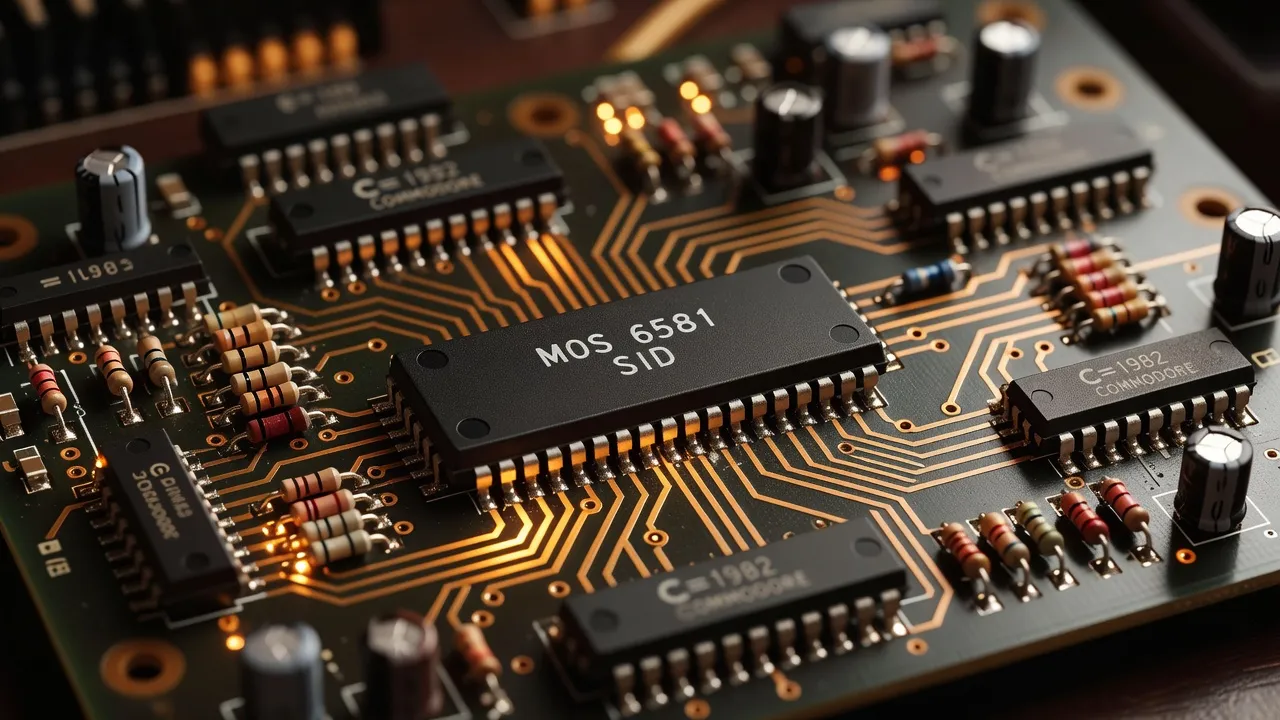
The sonic identity of chiptune rests on a handful of legendary integrated circuits that defined early digital audio. The MOS 6581 and its successor, the 8580 SID found in the Commodore 64, offered three oscillators with programmable ADSR envelopes, a resonant filter, ring modulation, and sync capabilities that allowed composers to craft everything from pulsing basslines to sweeping leads. These features turned the C64 into a surprisingly expressive instrument despite its 8-bit roots. In contrast, Nintendo’s APU 2A03 in the NES provided five channels—two pulse waves with variable duty cycles, a triangle wave, noise, and DPCM for sampled drums—enabling the rich chiptunes heard in titles like Super Mario Bros. and The Legend of Zelda.
Other chips expanded the palette further. The YM2149, used in the Atari ST and ZX Spectrum 128, delivered three square-wave channels plus noise, prized for its crisp, arcade-like tone in European demoscene productions. FM synthesis arrived via the OPL2 and OPL3 chips in AdLib and Sound Blaster cards, introducing complex two-operator and four-operator algorithms that powered the rich, bell-like timbres of PC games such as Doom and Jazz Jackrabbit. These chips, with their fixed architectures and low sample rates, forced musicians to master precise register writes and timing tricks, creating the genre’s hallmark “bit-crushed” warmth. Today, emulators and FPGA recreations like the 8580 SID FPGA core preserve these sounds with near-perfect accuracy for modern hardware.
Chiptune production often uses trackers — our guide to tracker music tools and formats covers the MOD, XM, and IT formats in depth.
Game Boy as Instrument: LSDJ and the DMG Scene
The Nintendo Game Boy’s DMG-CPU, featuring four channels—two square waves, one custom waveform, and noise—became a portable powerhouse thanks to Little Sound DJ (LSDJ). Developed by Johan Kotlinski and first released in 2000, LSDJ runs entirely on the cartridge, offering a tracker-style interface with song chains, tables for arpeggios and effects, and live performance modes that let artists trigger patterns on the fly. Its 4 MB ROM limit encouraged tight composition, resulting in albums like the 2002 “LSDJ” compilation featuring tracks such as “Kitty on a Broomstick” that showcased rapid pattern switching and waveform morphing.
The DMG scene exploded through events like the annual Blip Festival and underground meetups in New York and Tokyo. Artists such as Bit Shifter and Pixelh8 pushed the hardware with custom cartridges and link-cable collaborations, while the 2010s saw Game Boy ensembles performing at major festivals. The platform’s durability and affordability kept it relevant even as newer handhelds appeared; today, flash carts like the EverDrive GB and MIDI sync boxes allow integration with drum machines and DAWs. Veterans still prize the original DMG-01’s slight pitch drift for its organic character, while clones like the Analogue Pocket offer crisp LCD visuals paired with authentic sound.
NES/Famicom Chiptune: FamiTracker and the APU
FamiTracker, created by jsr in 2005 and later maintained by the community, became the definitive tool for composing on the NES APU. Its interface mirrors classic trackers yet exposes every register of the 2A03, including DPCM sample mapping for 1-bit drum kits and the extended MMC5 or VRC6 chips for additional pulse and sawtooth voices. Notable releases include the 2012 album “FamiTracker” by Random, whose track “Monodeer” demonstrated intricate echo effects achieved through clever volume envelopes and duty-cycle modulation.
AI is now entering the chiptune space — our deep dive into AI-generated chiptune and 8-bit sounds covers what the models can and cannot replicate.
The Famicom scene in Japan, centered around Disk System chiptunes, influenced Western producers through shared NSF files and competitions on Chipmusic.org. Artists such as Sabrepulse incorporated NES timbres into live sets using real hardware with MIDI interfaces, while Teamwork’s 2018 release “8-Bit Warrior” showcased multi-channel layering that pushed the APU’s noise channel into percussive melodic roles. Modern developments include the 2023 release of FamiStudio, a more visual editor that exports directly to NSF and supports the full suite of expansion audio chips, lowering the barrier for beginners while retaining the raw 2A03 character that defined games like Mega Man 2.
Commodore 64 SID: The Most Beloved Sound Chip in History
No chip commands the same reverence as the SID. The 6581’s distinctive analog filter and the 8580’s cleaner but still characterful design produced bass that could rattle television speakers and leads that cut through game soundtracks. The High Voltage SID Collection (HVSC), maintained since 1996, now exceeds 50,000 tunes, preserving works by legends such as Rob Hubbard (International Karate) and Martin Galway (Arkanoid). These composers exploited ring modulation and filter resonance to create sounds far beyond the chip’s three voices, as heard in Hubbard’s “Thrust” title tune with its evolving harmonic layers.
SoftAid’s curated list of free chiptune and tracker software is an excellent starting point for anyone building a chiptune toolkit.
The SID’s popularity persists through dedicated hardware like the 8580-based Ultimate 64 and software emulators tuned to cycle-accurate behavior. Modern artists including Goto80 continue to release new SID music, often performed on original breadbin C64s at events like the Datastorm demoparty in Sweden. The chip’s combination of digital control and analog warmth remains unmatched, inspiring countless clones and FPGA implementations while its archives serve as both historical record and creative resource for sample libraries and remixes.
Modern Chiptune: Scene, Concerts, and AI Hybrids 2026
Contemporary chiptune thrives at the intersection of live performance, online communities, and technological fusion. Anamanaguchi’s 2019 album “[USA]” brought chiptune rock to mainstream audiences through extensive touring with full bands and chiptune backdrops, while European acts like Goto80 and Random blend SID and YM2149 sounds in club settings. Festivals such as MAGFest and the Tokyo Chiptune Festival feature multi-chip orchestras and visual demoscene projections, drawing thousands of attendees annually.
The finest examples of chiptune artistry can be found in our selection of the best demoscene soundtracks from across four decades of scene history.
By 2026, AI hybrids are reshaping the landscape. Tools leveraging machine learning on HVSC datasets generate new SID-style patches and even entire patterns that artists refine in DefleMask or Beepbox. Projects like the 2024 “Neural SID” initiative demonstrated AI-assisted composition that respects the original 6581 filter curves while suggesting novel modulation routings. Live acts now incorporate real-time AI stem generation synced to hardware, allowing performers to improvise within strict chip constraints. Chipmusic.org remains the central archive and forum, hosting monthly compos and discussions that bridge veterans with newcomers exploring these hybrid workflows.
Getting Started with Chiptune Production
Beginners can enter the scene with accessible software that emulates classic chips without requiring vintage hardware. Beepbox offers browser-based chiptune sketching with instant export to WAV, while DefleMask supports multiple systems including the YM2149 and OPL3 in a single interface. For authentic SID work, GoatTracker provides a modern tracker environment that outputs .sid files playable on real C64s or emulators. FamiTracker and LSDJ remain essential for NES and Game Boy authenticity, with extensive tutorials available on YouTube and the Chipmusic.org wiki.
Archival resources accelerate learning: download the HVSC to study classic patterns, then experiment with the same register tricks in emulators. Hardware starters include inexpensive flash carts for the Game Boy or Arduino-based SID shields for breadboard experiments. Community events, whether local meetups or online compos, offer feedback and motivation. With consistent practice on these tools and a focus on the unique constraints of each chip, new producers quickly contribute to a tradition that spans from 1982 SID compositions to the AI-augmented concerts anticipated in 2026.