
Creative coding sits at the intersection of programming, visual art, sound design, and performance, offering an accessible entry point for anyone curious about turning algorithms into living, breathing experiences. In the demoscene, tracker music, chiptune, and AI-assisted generation communities, this practice has quietly powered countless real-time audiovisual experiments that echo the constraints and ingenuity of classic 64k intros or live chiptune sets. Whether you are a beginner eyeing your first animated sketch or a veteran tracker musician exploring procedural visuals, creative coding rewards experimentation while building skills that transfer directly to demoscene productions.
What Is Creative Coding?
Creative coding describes the use of programming languages and frameworks to generate art, music, animations, and interactive installations rather than conventional software utilities. Unlike traditional development focused on efficiency and user tasks, creative coding emphasizes process, emergence, and aesthetic surprise. Practitioners often iterate rapidly, treating code as a sketchbook where variables, loops, and randomness become brushes and palettes. The field traces roots to early computer artists such as Vera Molnár and Frieder Nake in the 1960s, but modern accessibility arrived with environments that lowered the barrier from C++ graphics pipelines to browser-based scripts runnable in minutes.
Within demoscene circles, creative coding shares DNA with the imperative to produce maximum visual and sonic impact under severe hardware limits. A 4-kilobyte intro coded in 2023 might employ the same sine-wave modulation tricks found in a p5.js particle system. Communities like the Genart Collective regularly host monthly challenges that mirror shader art monthlies, encouraging participants to ship small, self-contained pieces weekly. This ethos of constraint-driven creativity explains why many demosceners now teach creative coding workshops at events such as Revision or TokyoDemoFest, bridging the gap between bedroom coders and gallery installations.
Once you master the basics, shader programming and GLSL open up the full power of GPU-based generative visuals.
Essential Tools: Processing, p5.js, and openFrameworks
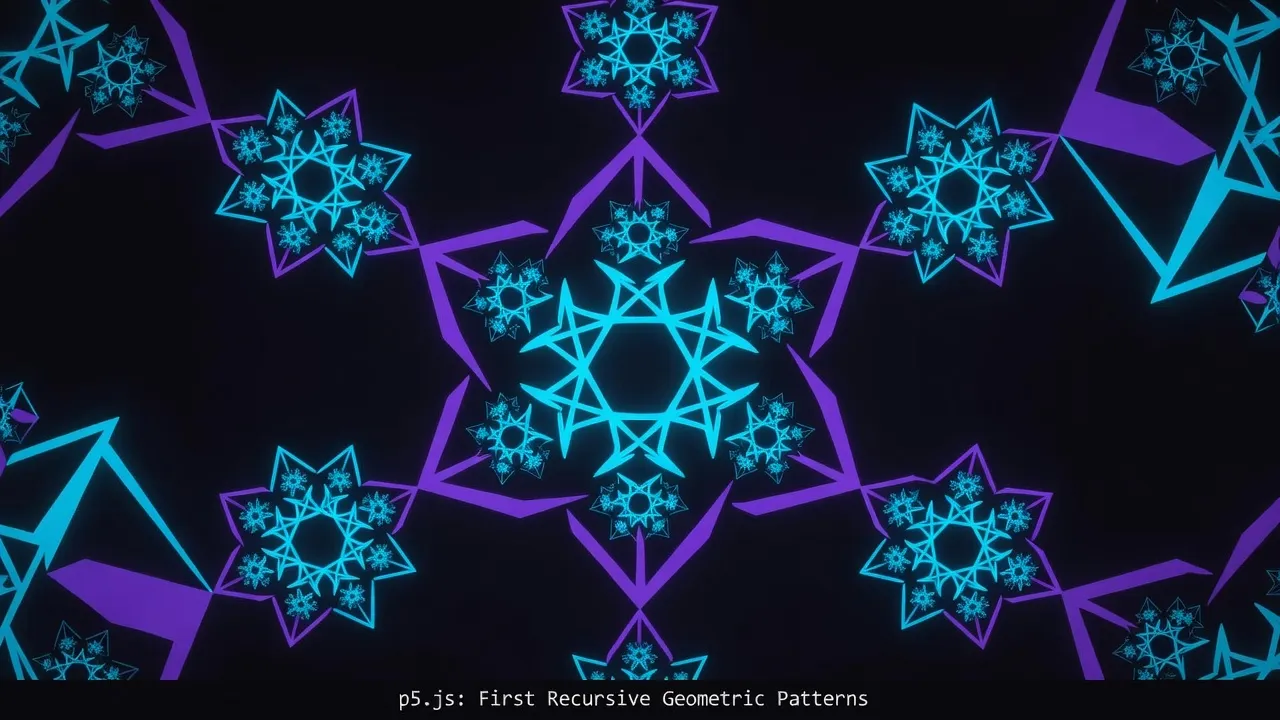
Processing, created in 2001 by Casey Reas and Ben Fry at the MIT Media Lab, remains the cornerstone for beginners. Written in Java, it provides an integrated development environment with immediate visual feedback: a single ellipse() call draws on screen without wrestling OpenGL contexts. Its syntax encourages quick prototyping of generative systems, and the Processing Foundation continues to maintain an extensive library ecosystem covering physics, typography, and sound via the Minim or Sound libraries.
For web deployment and zero-install accessibility, p5.js offers a direct JavaScript port maintained by the Processing Foundation. Sketches run in any modern browser, leverage WebGL for hardware acceleration, and integrate seamlessly with HTML5 audio APIs—ideal for embedding chiptune-inspired visuals alongside tracker modules hosted on Glitch.com or CodePen. Many demoscene live acts now project p5.js canvases driven by MIDI clock from LSDJ or MilkyTracker sessions.
Stepping up in performance and control, openFrameworks supplies a C++ toolkit wrapping OpenGL, OpenCV, and FMOD. Originating from Zach Lieberman and Theo Watson’s work around 2005, it powers high-resolution installations and real-time VJ sets. Demosceners appreciate its low-level access when porting effects from 1990s Amiga or PC demos to modern GPUs. A typical openFrameworks project might combine a 128x128 PICO-8 Lua core for pixel-art logic with C++ post-processing shaders, illustrating the cross-pollination between fantasy-console constraints and full desktop pipelines.
Shader Art: GLSL and Shadertoy
Shaders represent the purest expression of creative coding under real-time pressure. GLSL, the OpenGL Shading Language, lets developers write fragment and vertex programs that execute in parallel across GPU cores. Shadertoy, launched in 2013 by Inigo Quilez and Pol Jeremias, hosts an online gallery where users author, fork, and render GLSL snippets directly in the browser. Classic productions such as “Elevated” by Iñigo Quilez or “Dune” by Danguafer demonstrate how a few hundred lines can synthesize entire landscapes using ray marching and distance fields.
Demoscene veterans recognize immediate kinship: many modern 4k intros rely on the same signed-distance-field techniques popularized on Shadertoy. Monthly shader jams organized by communities like Shader Showdown at parties encourage participants to iterate live, much like a chipmusician tweaking patterns on stage. Beginners can start with simple ray-marched spheres, then layer noise functions from Book of Shaders to create procedural fire or water reminiscent of Second Reality’s famous water effects. Exporting these shaders into openFrameworks or Processing via the ofxShadertoy addon completes the pipeline from browser sketch to demoparty entry.
The logical next step from creative coding is procedural graphics generation techniques — algorithms that create imagery from mathematical rules alone.
Generative Art and Algorithmic Design
Generative art leverages algorithms to produce outcomes that evolve or vary with each run. Core techniques include Perlin noise for organic textures, L-systems for branching structures, and cellular automata for emergent patterns. In creative coding, a basic p5.js sketch might seed thousands of particles whose velocities follow curl-noise fields, yielding mesmerizing flow visualizations that double as backdrops for chiptune performances.
Algorithmic design extends this into functional objects—parametric posters, jewelry, or even stage visuals—where parameters exposed to the audience alter the output. Tools like Hydra enable live video synthesis by chaining GLSL functions in a REPL-style environment, allowing performers to remix webcam feeds or prerecorded tracker visualizations on the fly. The Genart Collective’s annual “30 Days of Generative Art” challenge has produced notable pieces that later appeared as demoscene invitations, proving that the line between gallery plotter prints and 64k executable art remains porous.
Live Coding: Performing with Code
Live coding transforms the creative coding session into a public performance. Coders project their editor while rewriting functions mid-set, often synchronized to music generated by SuperCollider, TidalCycles, or even PICO-8 cartridges. Hydra pairs naturally with these audio environments, letting visualists react to beats by modulating shader uniforms in real time. Notable practitioners such as Alexandra Cárdenas and the collective TOPLAP have elevated live coding to festival stages, where audiences witness both the code and its audiovisual consequences.
Solid code foundations matter in creative projects too — CodeYourWeb’s guide to code architecture principles for creative projects applies even to generative art systems.
Demoscene parallels are obvious: the pressure of a live deadline mirrors the final minutes before a party compo deadline. Many live coders incorporate chiptune aesthetics by driving visuals from VGM data streams or by emulating the limited color palettes of the Commodore 64 within their shaders. Platforms such as CodePen and Glitch facilitate collaborative sessions where remote participants fork each other’s sketches, echoing the demoscene’s long tradition of source-code releases and remix culture.
From Creative Coding to the Demoscene
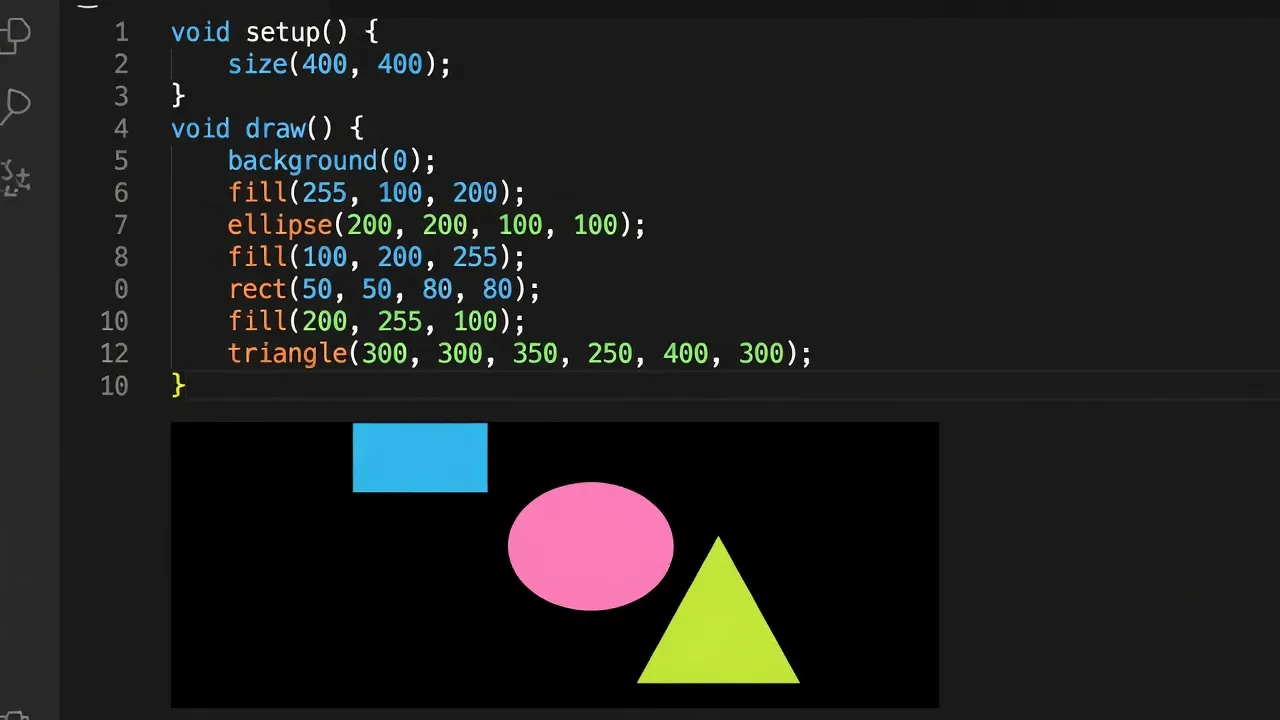
The demoscene and creative coding share foundational principles: real-time constraints, optimization under limits, and the celebration of process over product. Early demoscene groups such as Future Crew and Haujobb experimented with algorithmic effects that today map directly onto p5.js particle systems or Shadertoy ray marchers. Conversely, creative coders frequently submit to demoparties; pieces developed in openFrameworks have won wildcards at events like Assembly and Nordlicht by leveraging the same GPU techniques refined in browser experiments.
Much of what you will learn traces back to the demoscene community that invented many of these techniques.
Cross-pollination appears in shared libraries and workflows. PICO-8’s fantasy-console restrictions train coders in the precise resource management prized by 4k intro authors, while Hydra’s functional live-coding paradigm influences new audiovisual engines used in both gallery VJ sets and demoscene invitations. Communities overlap at conferences such as xCoAx and the Creative Coding Utrecht meetups, where demosceners lecture on size-coding alongside Processing Foundation workshops. This exchange keeps both scenes vital: demoscene techniques refresh academic and artistic practice, while creative coding’s emphasis on accessibility recruits the next generation of demo coders.
Your First Projects
Begin with a simple p5.js particle system on CodePen that responds to mouse velocity, then export it as a WebGL shader for Shadertoy refinement. Next, port the same logic into Processing to generate a looping 128x128 GIF suitable for PICO-8 cartridge art. For a live-coding milestone, set up Hydra to composite the shader output with webcam footage while a tracker module plays in the background.
Advance to a generative landscape using GLSL noise on Shadertoy, incorporating signed-distance fields to create a fly-through reminiscent of 1990s PC demos. Finally, assemble an openFrameworks application that loads a MIDI-synced chiptune and drives particle emission rates from the tracker’s pattern data. Each project builds directly on the tools and communities discussed, positioning you to contribute to both the broader creative-coding discourse and upcoming demoparty compos.