
The demoscene has long thrived on the electric atmosphere of physical gatherings, where coders, musicians, and visual artists converge to push the boundaries of real-time graphics, tracker music, and creative coding under intense deadlines. Demoparties emerged as the heartbeat of this subculture, evolving from small 1980s bedroom meets into massive international events that blend competition, collaboration, and celebration of chiptune and procedural art. From the sprawling Danish mega-parties of the early 1990s to today’s hybrid online formats, these events have documented the scene’s technical leaps while fostering lifelong connections among enthusiasts worldwide.
The Birth of the Demoparty: 1980s Roots
The demoparty concept traces its origins to the cracker and demo groups of the 1980s Commodore 64 and Amiga eras, when swapping disks and showing off intros at local copy parties gave way to organized competitions. Early gatherings like the 1986 Siliconvention in Sweden and various UK and German user-group meets focused on cracking protections and sharing warez, but the emphasis quickly shifted toward non-commercial creativity. By 1988-1989, events such as the Danish “Mega” parties and the first German “Copy Party” series in cities like Hamburg emphasized live coding sessions and music competitions using tools like Soundtracker. These proto-parties rarely exceeded a few hundred attendees, yet they established core formats: demo competitions judged on technical innovation, 4-kilobyte intros, and chiptune performances. The scene’s roots in illegal software distribution lent an underground thrill, but as groups like Future Crew and The Silents gained fame, parties became showcases for legal, original productions that highlighted hardware limits on machines like the Atari ST and Amiga 500.
New to the scene? Start with our introduction to what the demoscene is before exploring its event history.
The Golden Era: 1991-2000
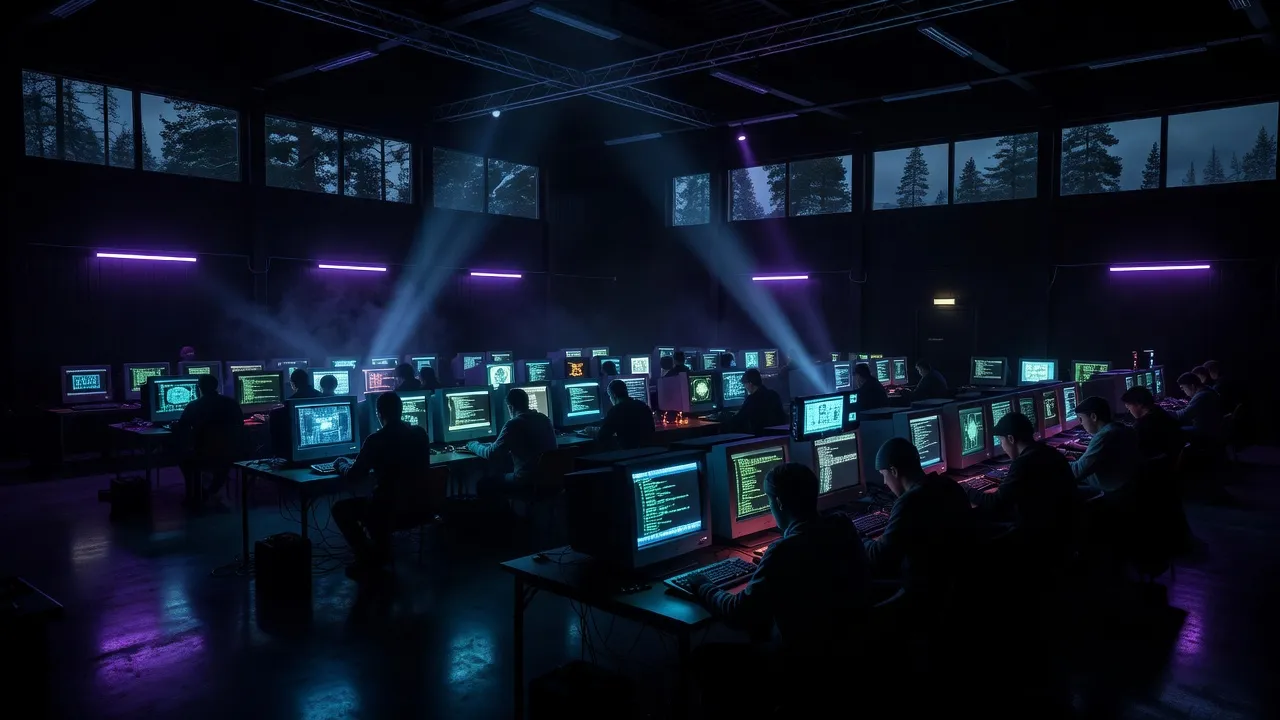
The period from 1991 to 2000 marked the explosive growth of demoparties, transforming them from niche meets into cultural landmarks with thousands of visitors. The Party in Aars, Denmark, launched in 1991 and quickly became the flagship event, drawing over 4,000 sceners at its 1996-1997 peak through a mix of massive demo competitions, live tracker music sets, and 24-hour coding marathons. Held annually until 2002, it featured categories for PC, Amiga, and console demos, with notable productions including Future Crew’s “Second Reality” follow-ups and complex 64-kilobyte entries that showcased voxel rendering and procedural effects. Parallel to this, Assembly in Helsinki, Finland—starting in 1992 and later moving to Tampere—solidified its reputation as Europe’s premier summer gathering, attracting 3,000-5,000 attendees yearly with its focus on high-end PC demos and music competitions using trackers like FastTracker 2. Assembly’s format emphasized public voting alongside jury decisions, leading to iconic releases such as “Halla” by Haujobb and numerous 4K intros that influenced the rise of shader-based graphics. Other events like the German “The Gathering” and Swedish “Dreamhack” precursors contributed to a vibrant calendar, where attendance figures routinely topped 2,000 and competitions highlighted the transition from 16-bit to 32-bit platforms. This golden era cemented demoparties as vital incubators for talent, with many productions later inspiring commercial games and visual effects.
The 2000s: Consolidation and the Rise of Revision
Every party tells the story of the groups who shaped these events — from Future Crew at Assembly to Mercury at Revision.
As the new millennium arrived, demoparties consolidated around fewer but more specialized events amid declining PC demo sizes and the rise of portable devices. Breakpoint, held in Bingen am Rhein, Germany, from 2002 until its final edition in 2010, exemplified this shift with its intimate yet technically rigorous atmosphere, drawing 800-1,200 attendees for Easter-weekend competitions focused on old-school Amiga and C64 revivals alongside modern OpenGL demos. Breakpoint’s notable productions included “Elevated” by RGBA and “Agenda” by Fairlight, often pushing 64-kilobyte limits with advanced raymarching techniques. Meanwhile, Revision emerged in Saarbrücken, Germany, as the dominant Easter event, launched in 2011 to fill the void left by Breakpoint’s end. Attracting around 1,000 sceners annually, Revision combines a family-friendly vibe with strict competition rules, featuring categories for PC demos, wild entries, and live music performances. Its productions frequently highlight AI-assisted generative tools and shader experiments, while maintaining the scene’s emphasis on real-time execution. Attendance stabilized as organizers prioritized quality over quantity, with events like Evoke in Cologne and Nordlicht in Iceland adding regional flavor through their focus on chiptune and creative coding workshops.
Stream Parties 2003-2011: A Finnish Community Party
The music performed at these parties draws on deep roots — musiques-traditionnelles.com examines how traditional music forms influence digital composers in a way that echoes through demoscene audio culture.
Finland’s Stream parties carved out a distinctive niche as accessible community events that welcomed international visitors with free entry, running annually from 2003 to 2011 in Tampere and Ylöjärvi. Organized by Matt Current and Jean Nine, these gatherings emphasized relaxed competition formats over commercial spectacle, typically hosting 300-600 attendees in school or community venues. Competitions centered on tracker music, pixel art, and small-scale demos, with notable releases including collaborative chiptune albums and live-coded visuals that showcased the Finnish scene’s deep roots in the Amiga era. Stream’s open-door policy for overseas sceners fostered cross-cultural exchanges, often featuring workshops on tools like Renoise and MilkyTracker. The events concluded after 2011 as organizers shifted focus to other projects, yet they remain remembered for democratizing demoparty culture and providing a low-pressure entry point that contrasted with larger commercial-tinged gatherings.
Demoparties in 2026: Global and Online
Understanding the competition formats at demoparties helps you appreciate what each party was actually testing and celebrating.
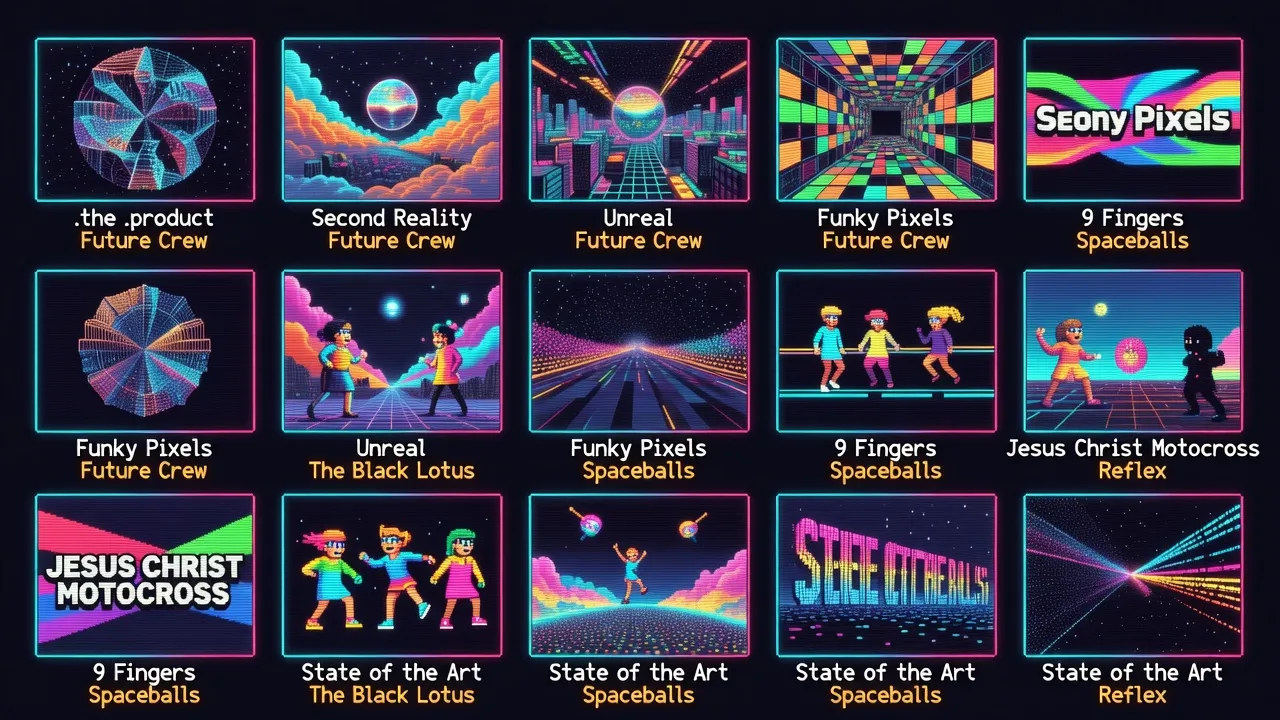
By 2026, demoparties have evolved into a global network blending physical and hybrid online formats, reflecting the scene’s adaptation to streaming platforms and remote collaboration tools. Revision continues in Saarbrücken with its signature Easter timing and roughly 1,000 on-site participants, supplemented by live streams that allow virtual attendees to vote in competitions featuring AI-generated music and WebGL experiments. Assembly maintains its Tampere base with expanded online qualifiers, while new events like the virtual “Demoparty Online” series and Tokyo’s “TokyoDemoFest” extend reach to Asian and South American coders. Attendance at major physical events hovers between 500 and 2,000, supported by platforms such as Twitch and Discord for real-time feedback. Notable 2020s productions include shader-based entries leveraging machine learning for procedural content, alongside revivals of old-school formats on modern hardware. This era prioritizes sustainability and inclusivity, with many parties offering hybrid passes and archives of all releases for post-event study.
How to Attend Your First Demoparty
Attending your first demoparty begins with researching upcoming events through resources like pouet.net and demoparty.net calendars, where listings detail dates, locations, and entry fees. Start small by targeting community-oriented gatherings such as those modeled on the historic Stream series, which historically offered free entry to international visitors to encourage participation. Pack essentials including a laptop with tools like Blender, Renoise, or Shadertoy, along with power strips and headphones for late-night coding sessions. Upon arrival, register for competitions in your preferred categories—whether 4K intros, music, or graphics—and engage with workshops on creative coding fundamentals. Network during screenings of notable productions, respect the “no sleep” culture while staying hydrated, and document your experience for the scene archives. Veterans advise beginners to focus on learning rather than winning, as the communal spirit of events like Revision and Assembly rewards curiosity and collaboration above all.