
What Is the Demoscene? A Complete Guide
The demoscene is a global computer art subculture that transforms technical constraints into breathtaking real-time audiovisual performances. Born from 1980s software piracy circles, it has evolved into a self-sustaining creative community that values code efficiency, artistic vision, and live competition above commercial success. Demosceners push hardware to its limits, crafting intricate effects without relying on pre-rendered video or external libraries. This guide explores the movement’s roots, technical foundations, legendary contributors, vibrant events, current state, and practical entry points for newcomers in 2026.
Origins: From Crack Intros to Art Form
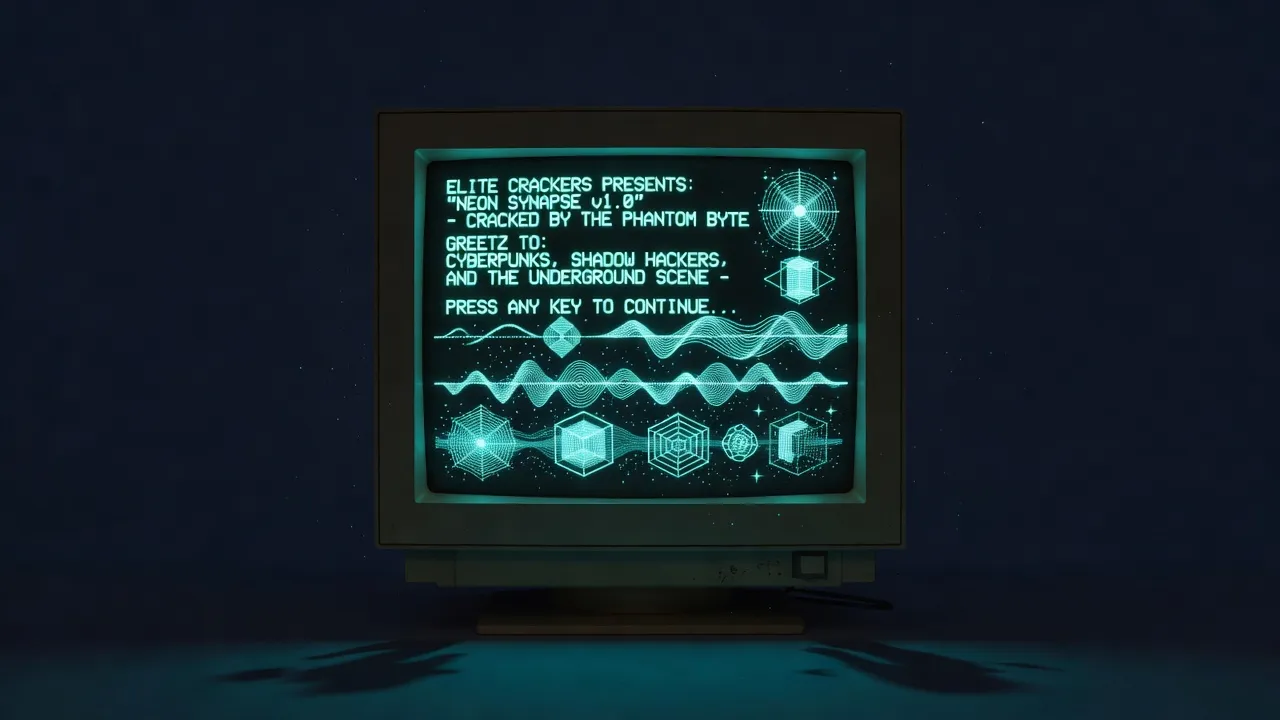
In the mid-1980s, Commodore 64 and Amiga users traded cracked games across bulletin board systems. Crackers removed copy protection and added short audiovisual loaders called crack intros to claim credit. These intros featured scrolling text, colorful logos, and chiptune music, all squeezed into a few kilobytes. Groups such as The Black Lotus and Fairlight competed to create the most impressive loaders, turning necessity into spectacle.
By 1987, some coders realized the intros could stand alone. The first standalone demos appeared on the Amiga, where the machine’s custom chipset allowed fluid copper-list effects and hardware sprites. Productions like “Mental Hangover” by Anarchy demonstrated that a full program could run without a game attached. The shift accelerated when the IBM PC gained popularity; early PC demos adapted to VGA cards and Sound Blaster audio.
For a deeper look at the events that shaped the scene, our guide to the history of demoparties covers the most important gatherings from Assembly to Revision.
The cultural leap occurred around 1992 when Future Crew released Second Reality at the Assembly party. Its ray-traced tunnel, dynamic lighting, and synchronized soundtrack proved that a 1.2 MB executable could rival commercial multimedia. What began as bragging rights among pirates matured into an autonomous art form celebrating programming skill and visual poetry. Finland’s recognition of the demoscene as intangible cultural heritage by UNESCO in 2020 formalized this transformation on the world stage.
What Makes a Demo? The Technical Craft
A demo is a self-contained executable that generates synchronized graphics and music in real time. Size categories define the challenge: 4-kilobyte intros demand procedural generation of every pixel and waveform, while 64-kilobyte productions allow more elaborate 3D scenes. Compos at demoparties judge entries in separate tracks—oldskool, newskool, 4K, 64K, and wild—ensuring fair comparison across eras and platforms.
Core techniques include palette cycling, voxel landscapes, metaballs, and distance-field ray marching. Music relies on tracker formats such as .MOD, .XM, and .IT, where composers arrange patterns of samples rather than streaming audio. Modern entries often target OpenGL, Vulkan, or even custom FPGA hardware while respecting the “no external assets” rule.
Constraints breed creativity. A 4K intro cannot store textures, so coders synthesize noise functions and signed distance fields on the GPU. Realtime synchronization demands precise timing loops that align visual events to musical beats measured in ticks. Tools like Crinkler for executable compression and Shader Minifier for GLSL golfing remain essential. The result is an experience that feels both impossible and inevitable, executed entirely by the artist’s code.
Famous Demo Groups and Their Legacy
Future Crew’s Second Reality (1993) set the benchmark for PC demos and inspired countless imitators. Their follow-up, Unreal, introduced advanced texture mapping and particle systems that influenced commercial game engines. Farbrausch, active from the late 1990s, specialized in extreme size optimization; their 64K production “fr-08: .the .product” combined a full 3D engine, dynamic music, and narrative elements inside an executable smaller than many single textures today. ASD pushed boundaries on the Amiga with “Planet Rocklobster,” showcasing copper effects and sampled audio that many believed impossible on stock hardware.
The scene’s identity is defined by its collectives — our overview of famous demo groups profiles Future Crew, Fairlight, and the other groups who built the artform.
Other influential groups include Haujobb, known for atmospheric design and meticulous lighting, and TBL, whose “EON” demonstrated advanced ray marching on limited hardware. These crews rarely disband; instead, members migrate across projects, preserving knowledge through source releases and detailed post-mortems. Their archives on Scene.org serve as living textbooks for new generations.
Demoparties: Where the Scene Comes Alive
Demoparties function as both festival and tournament. Attendees bring laptops, CRT monitors, and custom hardware to a shared hall where compos run around the clock. Assembly in Helsinki, founded in 1992, remains the largest, drawing thousands for its 4K and 64K finals. Revision in Saarbrücken emphasizes community and old-school categories, while TokyoDemoFest highlights Japanese chip-tune and pixel-art traditions.
Live compos require entries to run on provided hardware without modification. Organizers supply vintage Amigas, Atari STs, and modern GPUs to ensure compatibility. Beyond competitions, parties host seminars on shader programming, tracker composition, and hardware reverse engineering. The social layer—late-night debugging sessions and spontaneous collaborations—often produces the most enduring friendships and future group line-ups.
The demoscene’s musical heritage connects to broader traditions of constrained composition — musiques-traditionnelles.com explores how traditional music forms influence digital composers in ways that resonate with the scene aesthetic.
The Demoscene in 2026: Active and Evolving
In 2026 the demoscene thrives across platforms. New categories embrace Raspberry Pi, web browsers via WebGPU, and even browser-based WebAssembly 4K intros. Pouet.net continues as the primary release portal, while Demozoo.org maintains exhaustive metadata on every production, group, and party since the 1980s. Scene.org remains the canonical archive, hosting terabytes of downloadable executables and source code.
Recent trends include hybrid physical-digital entries, such as demos controlling custom LED installations, and explorations of AI-assisted procedural generation that still require human curation to meet size limits. The Finnish UNESCO listing has encouraged academic study, with universities offering courses that treat demoscene optimization as a model of sustainable computing. Cross-pollination with game development and VJ culture keeps the scene visible beyond its core audience.
Ready to join? Our practical guide to getting started in the demoscene covers the tools, platforms, and first steps for newcomers.

Getting Started: Your First Steps
Begin by visiting Pouet.net and Demozoo.org to watch seminal productions. Download an emulator such as WinUAE for Amiga classics or DOSBox-Staging for early PC works. Install a modern tracker like MilkyTracker or Renoise to experiment with chiptune composition.
For coding, start with Processing or p5.js to replicate classic effects such as fire or plasma. Progress to Shadertoy for GPU-accelerated 4K experiments. Join the demoscene Discord servers and follow party announcements on pouet.net. Submit a small 4K entry to a local or online compo; feedback from veteran coders accelerates learning faster than any tutorial.
Hardware enthusiasts can acquire a Raspberry Pi Pico or MiSTer FPGA rig to target authentic old-school platforms. Document every experiment; the community values process as much as final results.
Conclusion
The demoscene endures because it rewards ingenuity over resources. From crack intros on the Commodore 64 to WebGPU experiments in 2026, the core impulse remains unchanged: create something beautiful that runs in real time under strict constraints. Whether you contribute a 256-byte effect, organize a party, or simply archive forgotten productions, you join a living continuum that values skill, collaboration, and wonder. The next legendary demo is waiting to be written—perhaps by you.