
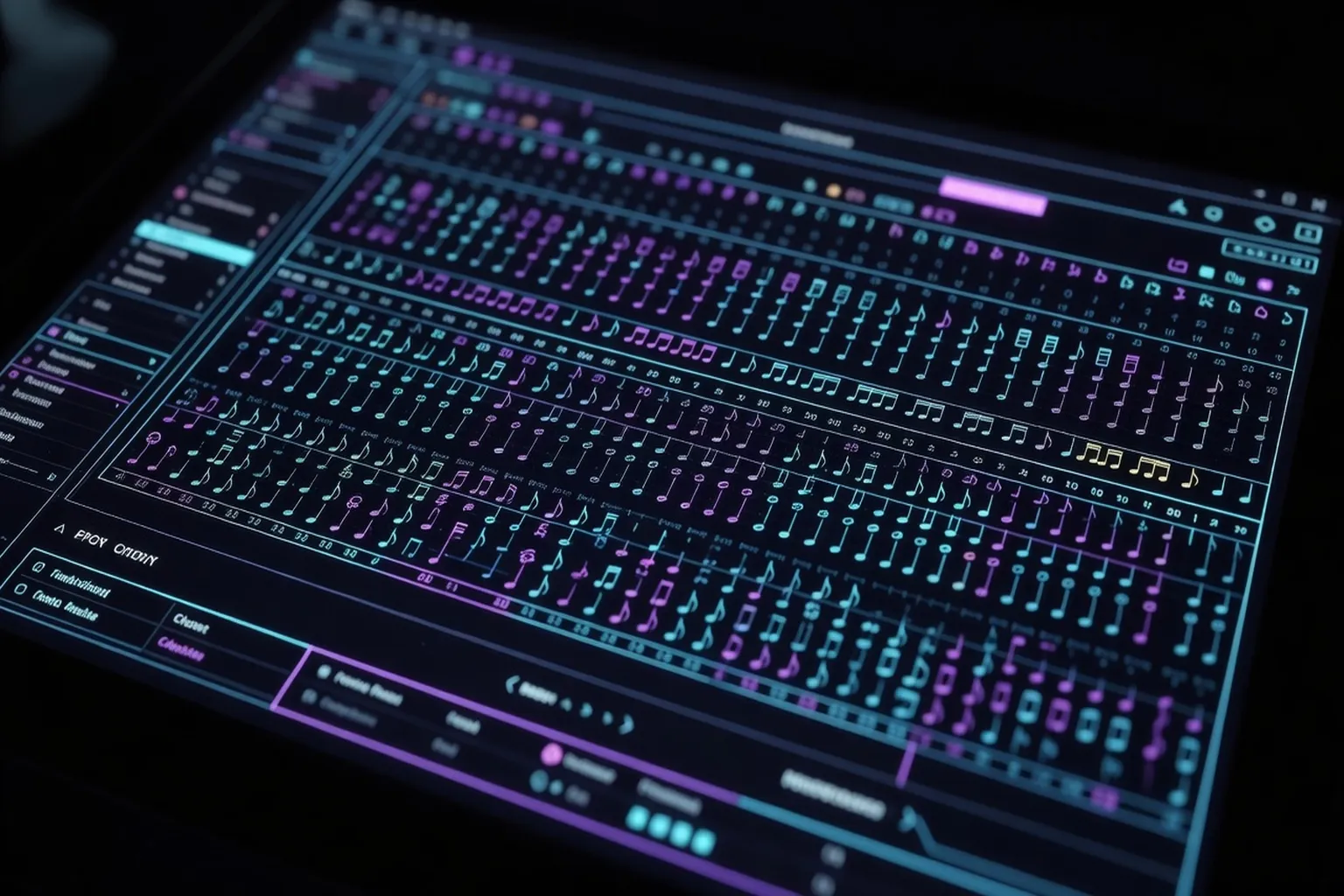
Tracker music occupies a unique niche at the intersection of demoscene culture, chiptune aesthetics, and precision-based music production. Emerging from the constraints of 1980s home computers, it offered composers a grid-based interface for sequencing samples with mathematical accuracy, influencing everything from Amiga game soundtracks to contemporary electronic releases. Its legacy persists in archives like modarchive.org and radio streams on SceneSat, where enthusiasts continue to celebrate the format’s raw power and creative limitations.
What Is Tracker Music? A Brief History
Tracker music traces its origins to 1987 when Karsten Obarski released Ultimate Soundtracker for the Commodore Amiga. This pioneering tool allowed users to arrange short audio samples across a vertical timeline of rows and channels, sidestepping the need for traditional notation or expensive hardware sequencers. The Amiga’s Paula chipset provided four hardware voices, and Obarski’s software turned those voices into a compositional playground for the growing demoscene.
By 1989, ProTracker had become the de facto Amiga standard, introducing features such as sample looping, fine-tuning, and an expanded effect command set that composers used to simulate vibrato and portamento on the limited hardware. The format spread rapidly through bulletin board systems and demo parties, where groups competed to create the most impressive audiovisual presentations. Productions like the 1993 Future Crew demo Second Reality showcased tracker music’s ability to drive complex, dynamic soundscapes that synced perfectly with real-time graphics.
The PC scene adopted and expanded the concept in the early 1990s. Tracker music became synonymous with the underground electronic movement, bridging the gap between chip music and emerging dance styles. Even as mainstream DAWs gained dominance, the tracker paradigm survived because of its speed, low resource demands, and distinctive workflow that encourages pattern reuse and micro-editing.
Tracker music and chiptune share deep roots — our complete guide to chiptune and 8-bit music production explores that overlap in detail.
Tracker File Formats: MOD, XM, IT, S3M Explained
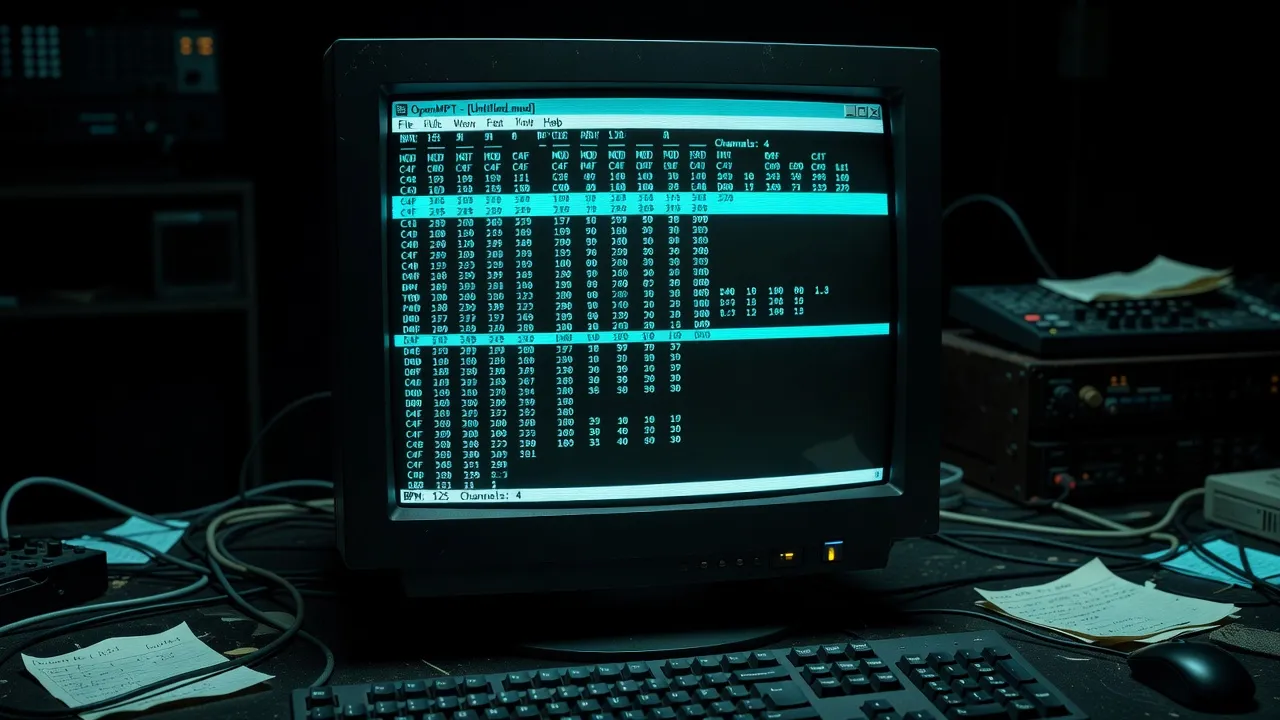
The MOD format, introduced with Ultimate Soundtracker and refined in ProTracker, remains the foundational container. It stores up to 31 samples, pattern data for four channels, and a song length table, all within a compact file that fits easily on floppy disks. Its simplicity made MOD files the lingua franca of the early demoscene.
FastTracker 2, released in 1994 by Triton, introduced the XM format and expanded capabilities to 32 channels with 16-bit samples and a richer instrument structure including volume and panning envelopes. This leap allowed PC musicians to emulate studio productions while retaining the tracker’s grid interface. Impulse Tracker followed in 1995 with the IT format, pushing channel counts to 64 and adding features such as resonant filters, new note actions, and a more sophisticated instrument model that supported multisampling.
S3M, developed for Scream Tracker 3, served as an intermediate step with 16 channels and a flexible effect system that many composers still favor for its balance of features and compatibility. Each format carries distinct limitations and strengths: MOD files evoke nostalgia with their strict four-channel Amiga sound, while IT files enable intricate, filter-driven compositions that rival early software synthesizers. Modern players and converters preserve these nuances, ensuring that historical modules sound authentic on contemporary hardware.
How Tracking Works: Patterns, Channels, and Effect Commands
At its core, a tracker presents music as a spreadsheet of notes and commands. Patterns consist of 64 rows by default, though lengths vary, with each row containing note, instrument, volume, and effect data across multiple channels. Playback advances row by row at a configurable tempo, creating looping phrases that the order list arranges into full compositions.
Once your module is finished, choosing the right audio format choices for your exports determines how it will sound and how large the file will be.
Effect commands provide the real magic. The classic 0xy arpeggio command rapidly cycles between three notes to simulate chords on monophonic hardware. Vibrato (4xy) and tremolo (7xy) modulate pitch and volume respectively, while portamento commands (1xx, 2xx, 3xx) glide between notes for expressive slides. Volume slides (Axy) and sample offset commands further sculpt timbre and dynamics without leaving the pattern view.
These hexadecimal effects demand precision; a single misplaced digit can transform a melody into noise or unlock unexpected textures. Composers often combine multiple effects per row, layering portamento with volume automation to mimic analog synthesis. The result is music that feels both mechanical and organic, a hallmark that distinguishes tracker works from point-and-click DAW arrangements.
Famous Tracker Musicians and Their Work
Purple Motion, a key member of the Future Crew, delivered the iconic soundtrack for Second Reality in 1993, using ProTracker to craft driving techno sequences that perfectly complemented the demo’s groundbreaking 3D routines. Skaven, associated with groups like Triton and Hornet, produced Crystal Dream 2 and the StarDust soundtrack, employing intricate pattern work and atmospheric pads that pushed the Amiga’s four voices to their limits.
SoftAid’s roundup of the best free and open-source music software includes several tools that pair perfectly with OpenMPT and MilkyTracker.
Necros gained renown in the PC scene with pieces such as Impact!, demonstrating FastTracker 2’s expanded channels through aggressive breakbeats and melodic hooks that influenced countless later productions. Basehead contributed influential modules in the mid-1990s that blended hip-hop grooves with tracker-specific effects, showcasing how the format could adapt to diverse genres. These artists often released their work alongside demo groups or on early internet archives, establishing benchmarks for technical and artistic excellence that new trackers still study today.
Modern Tracker Software in 2026
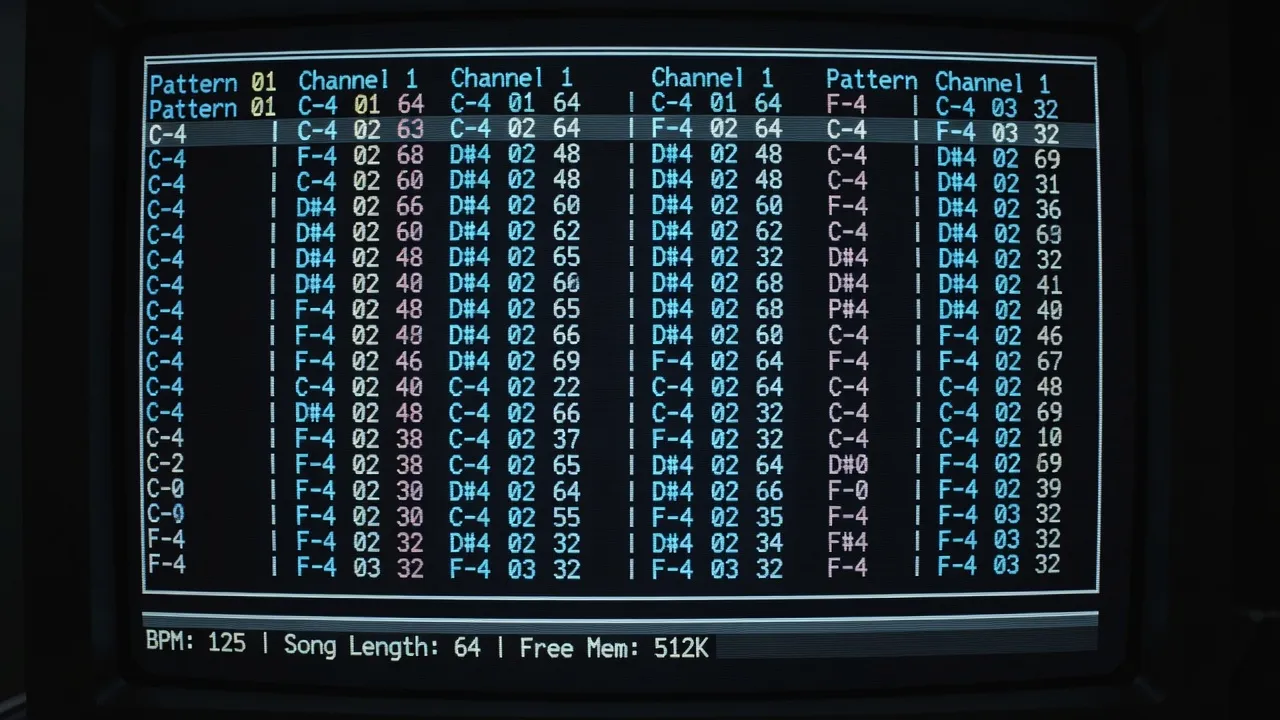
In 2026, the tracker ecosystem thrives through both preservation and innovation. OpenMPT continues to evolve as the premier Windows application for handling legacy and modern formats, offering VST plugin support alongside authentic playback of MOD, XM, IT, and S3M files. MilkyTracker maintains cross-platform fidelity to the FastTracker 2 interface, appealing to purists who value pixel-perfect workflow recreation.
Many producers pair trackers with open-source DAWs that complement trackers for mixing and mastering.
Renoise remains the flagship for professionals, integrating tracker sequencing with full DAW features such as multi-core audio processing, advanced modulation routing, and plugin instruments while preserving the classic pattern matrix. Schism Tracker provides a lightweight, terminal-friendly option that runs on virtually any system, ensuring accessibility for live coding performances and embedded installations.
These tools now interface seamlessly with AI-assisted sample generation and cloud-based collaboration, yet retain the core grid that defined the format decades ago. Scene events and online contests continue to spotlight new modules, proving that tracker music’s constraints still spark remarkable creativity.
Getting Started with Tracker Music
Beginners can dive in immediately with free options like MilkyTracker or Schism Tracker. Download a handful of classic modules from modarchive.org to study their patterns and effect usage. Focus first on creating simple four-channel loops using short drum and bass samples before experimenting with arpeggios and portamento.
Progress to OpenMPT or Renoise once comfortable with the basics, exploring 16- and 32-channel arrangements and instrument envelopes. Regular participation in SceneSat broadcasts and mod competitions provides feedback and community connection. With practice, the tracker’s vertical workflow becomes second nature, opening pathways to music that feels both retro and strikingly contemporary.