
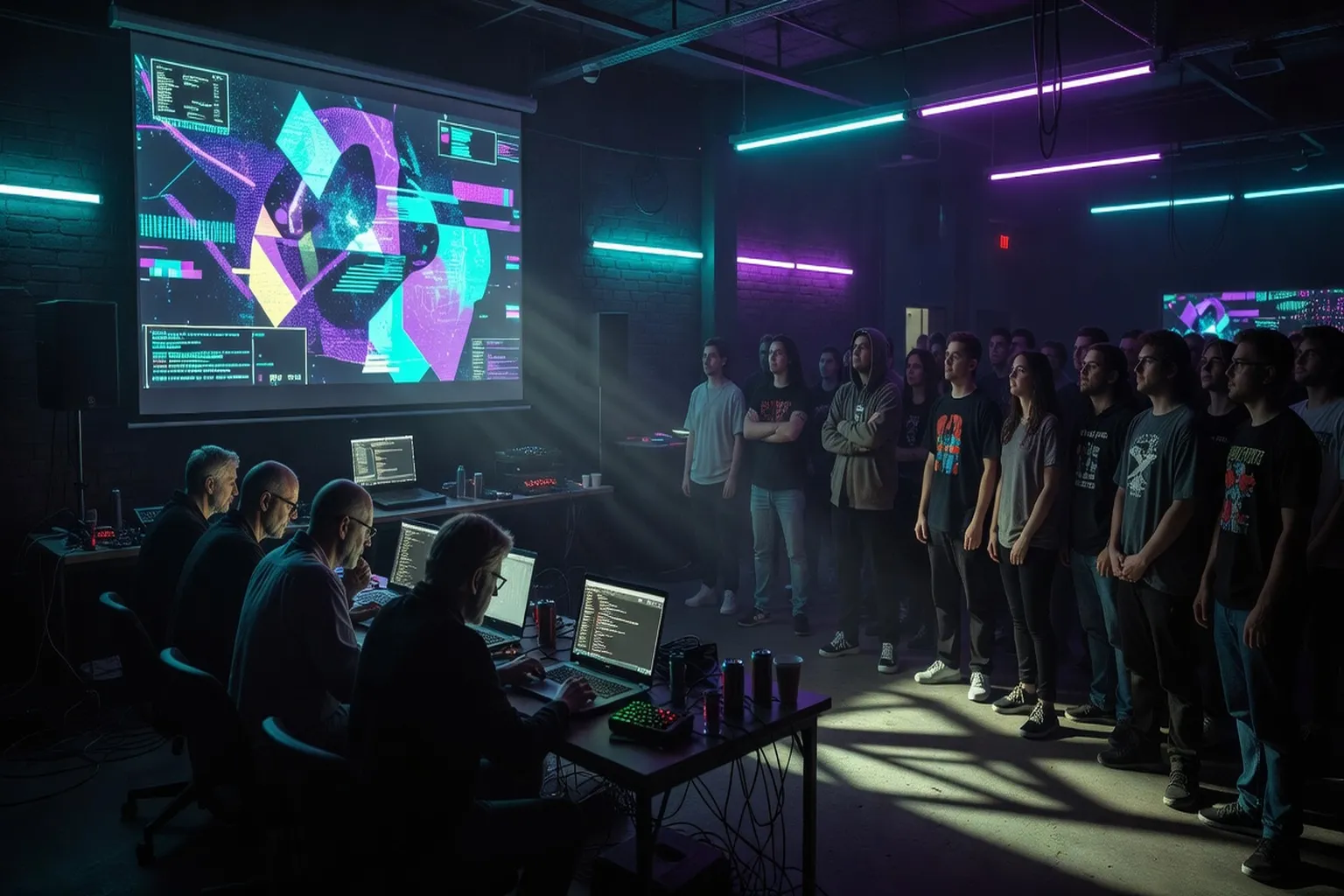
Demoscene competitions, often called compos, form the beating heart of the global demoscene, where coders, musicians, and visual artists push hardware and creativity to their absolute limits in timed, rule-bound showcases. These events blend technical wizardry with artistic expression, drawing crowds at parties from Finland’s Assembly to smaller gatherings like Stream. The 2011 edition of Stream serves as a compelling case study throughout this exploration, highlighting its unique 8-minute demo runtime cap, dedicated low-end category on the HP Mini 2140 netbook, handheld platforms including GBA, Galaxy S, N900, and N8, plus an intranet-based voting system that kept results intimate and immediate.
Competition Categories Explained
Demoscene events divide entries into clearly defined categories that reward specialization while allowing cross-pollination between disciplines. High-end PC Demo represents the flagship class, where productions like the 2010 Assembly winner “Elevated” by RGBA demonstrate real-time raytracing, complex particle systems, and synchronized tracker music on modern GPUs without size restrictions beyond practical file limits. In contrast, the 64KB Intro category caps executable size at exactly 65536 bytes, forcing extreme optimization; Farbrausch’s “.the .product” from 2000 remains a landmark example that packed a full audiovisual experience into that footprint using procedural generation and custom 4klang-style synthesis. The 4KB Intro tightens the constraint further to 4096 bytes, exemplified by productions such as “F —” by TBC at Revision, where every byte counts in generating fractal landscapes and chiptune scores. Even smaller, the 256-byte Intro challenges coders to create mesmerizing effects like rotating tunnels or plasma effects using only assembly hacks and minimal data tables, with classics such as “256b” entries at Demobit showcasing pure ingenuity.
Oldschool categories celebrate legacy hardware, encompassing C64, Amiga, ZX Spectrum, and Atari ST platforms where entries must run on original machines or accurate emulators without modern enhancements. Productions like the Amiga demo “State of the Art” by Razor 1911 highlight raster interrupts and copper effects that defined the 1990s. Handheld categories focus on portable devices, allowing entries for GBA, DS, GBC, and in Stream 8’s case, smartphone and Maemo platforms such as the Galaxy S, N900, and N8. Music categories split into Listening, Dance, Chiptune, and Tracked, where tracked modules using tools like OpenMPT or MilkyTracker compete on melody, arrangement, and hardware authenticity. Graphics entries reward pixel art or raytraced stills, often created with GrafX2 or Blender under strict resolution rules. Finally, the Wild category serves as a catch-all for experimental works, animations, or installations that fall outside traditional demo formats, frequently incorporating live coding or AI-assisted generation.
Competitions take place at the demoparties that host these competitions — each party has its own tradition and rules.
Stream 8 embraced this breadth by running parallel handheld compos alongside its low-end HP Mini 2140 track, ensuring both veteran scener and newcomers could compete meaningfully.
Size Limits and Platform Rules
Strict size limits define the technical battlefield of demoscene intros. The 64KB boundary encourages procedural content over pre-rendered assets, while 4KB and 256-byte categories push coders toward self-modifying code, compressed shaders, and mathematical functions that generate visuals on the fly. Platform rules further refine eligibility: oldschool entries must execute on period hardware or cycle-accurate emulators like VICE for C64, with no post-1995 enhancements permitted. High-end PC demos target contemporary DirectX or Vulkan APIs but often include fallback paths for compatibility.
Handheld rules at Stream 8 mandated native execution on the specified devices, with GBA entries limited to 32MB cartridges and strict timing for the ARM7 processor, while smartphone categories required apps to run on stock Android or Symbian firmware without rooting. The low-end HP Mini 2140 category enforced an Intel Atom processor and integrated graphics, mirroring netbook constraints of the era to prevent high-end optimizations from dominating. Runtime caps, such as Stream 8’s eight-minute maximum for demos, prevent marathon entries and keep audiences engaged, forcing concise storytelling through visuals and music. These rules promote fairness, as groups like MFX and Brainlez Coders have historically adapted their pipelines to fit multiple categories without violating platform authenticity.
The Submission Process Step by Step
Looking for inspiration? Browse past winners in each category to understand what the judges reward.
Submitting to a demoscene competition follows a deliberate sequence designed to maintain integrity and technical compliance. First, creators finalize their production, verifying it boots cleanly on target hardware and adheres to size and runtime limits. Next, they prepare documentation including a text file detailing credits, tools used, and any special requirements, such as specific tracker formats for music entries. At Stream 8, submitters uploaded files via the party’s local network to designated folders, ensuring entries for the HP Mini 2140 category were tested on identical hardware beforehand.
Organizers then perform validation checks, confirming executables launch without external dependencies and that handheld builds target the correct architectures like ARM for GBA or N900. Once accepted, entries receive unique identifiers and are queued for the competition screening. Creators often release “final” versions post-party with minor fixes, but the submitted build remains the official compo entry. This process, repeated across hundreds of global events, ensures transparency while allowing rapid turnaround from upload to public viewing.
Voting Systems and How Winners Are Chosen
Voting mechanisms vary from party to party but emphasize community consensus. Traditional point systems allocate scores from 1 to 10 across categories, with results tabulated live or via spreadsheets. Stream 8 distinguished itself with intranet voting, where attendees connected to a local server to cast ranked votes on each entry after screenings, preventing external manipulation and fostering immediate discussion among the on-site crowd. Handheld and low-end categories used the same system, allowing voters to compare GBA chiptunes directly against N8 visuals on their own devices.
Many competitors build their entries on BSD and Linux systems — FreeBSD-HowTo documents essential BSD tools used by demosceners in their development workflow.
Winners emerge from aggregated scores, with ties resolved by organizer discretion or audience applause. This approach rewards productions that resonate emotionally as well as technically, as seen when intricate 256-byte intros occasionally outrank larger demos due to sheer elegance. Transparency is maintained through published results and sometimes raw vote data, reinforcing the scene’s meritocratic ethos.
Competition Culture and Etiquette
The most technically extreme category is the 4K intro category — entire demos packed into 4096 bytes of code.
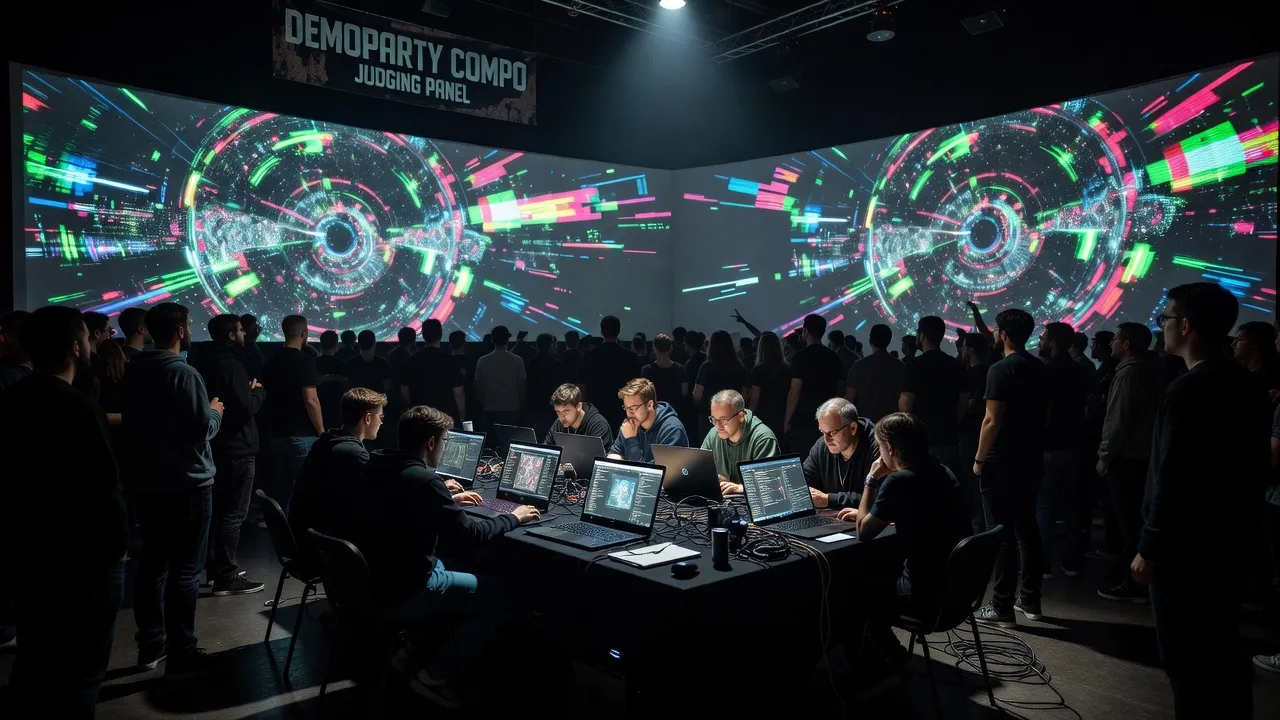
Demoscene culture thrives on mutual respect and collaborative spirit. Etiquette dictates that entrants credit all contributors accurately, avoid direct copies of prior works, and refrain from submitting unfinished builds that waste screening time. At events like Stream 8, participants shared hardware for testing, with experienced coders mentoring newcomers on fitting music into tracked formats or optimizing for the HP Mini 2140’s limited RAM. Trash-talk remains light-hearted, often confined to forum banter rather than official channels, while celebrating rival achievements is considered good form.
Wild entries especially encourage boundary-pushing, yet must still respect runtime and platform rules to avoid disqualification. The scene values release culture, with most productions made available via pouët.net shortly after the event, enabling global discussion and inspiration.
Notable Compo Moments in Scene History
Iconic moments punctuate demoscene history, from the 1993 Assembly where Second Reality by Future Crew redefined PC demos with its groundbreaking 3D engine and sampled audio. In the 64KB realm, the 2007 release of “Candy Mountain” by Fairlight showcased voxel rendering that astonished audiences. Stream 8’s handheld compos delivered their own highlights, with several GBA entries leveraging the platform’s sprite hardware for fluid animations that rivaled oldschool Amiga works, while the low-end HP Mini 2140 category produced surprising results when a minimalist procedural demo edged out more complex smartphone entries through superior synchronization.
Other milestones include the rise of 4KB raytracers at Revision parties and the integration of tracked music into Wild entries that blurred category lines. These moments underscore how competitions continually evolve, inspiring new generations to explore size-constrained creativity on everything from ZX Spectrum to modern AI-assisted tools while preserving the core thrill of live audience reactions.