
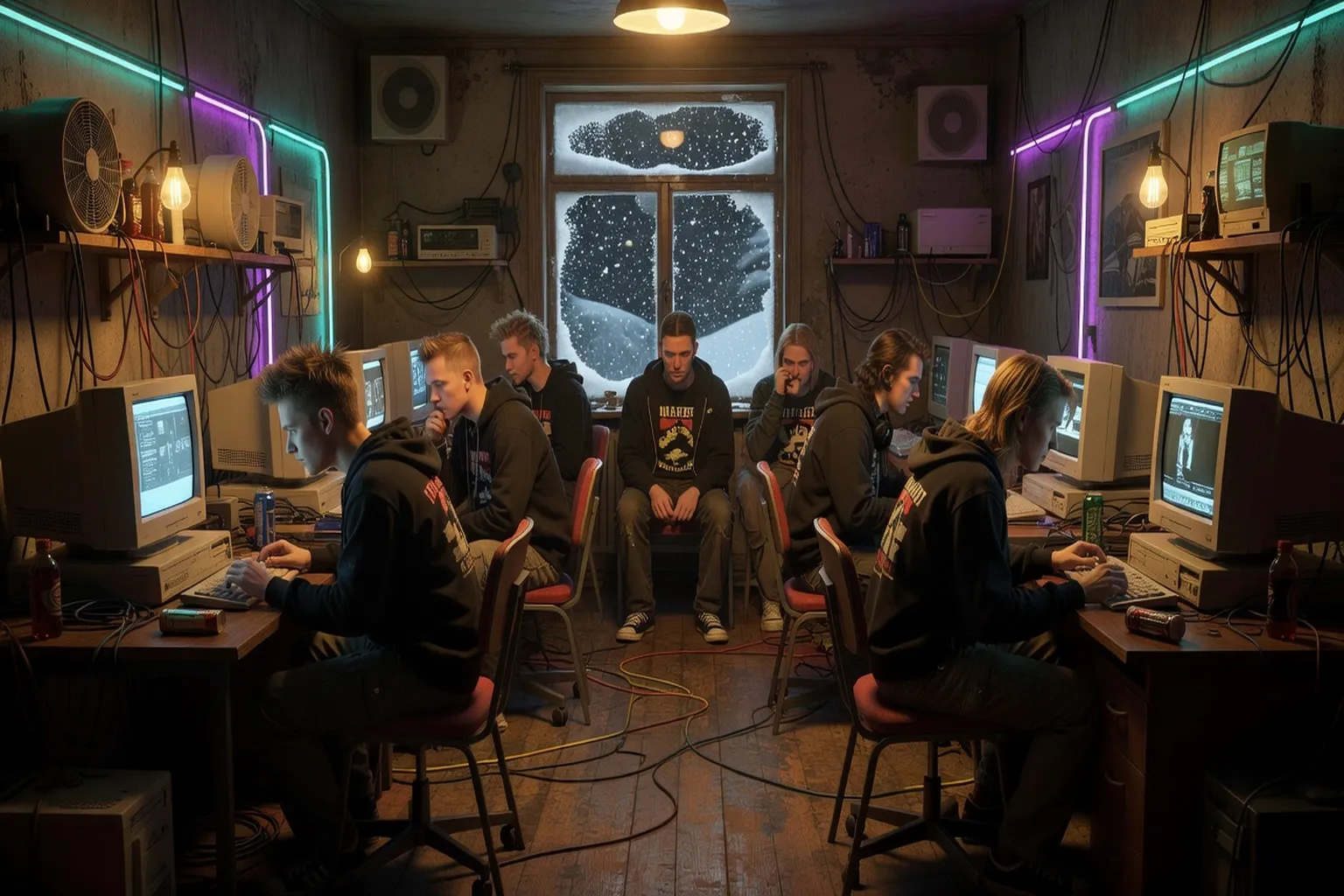
In the annals of the demoscene, certain events shine brightly, not just for their scale but for their spirit and the indelible mark they left on a vibrant subculture. Stream 2007, held from September 21st to 23rd in the industrial heartland of Tampere, Finland, stands as one such beacon. Organized by the dedicated team at Matt Current, this demoparty was more than just a gathering; it was a snapshot of the Finnish demoscene at a pivotal moment, a testament to community, and a crucial node in the bustling European network. For three days, a diverse assembly of coders, artists, musicians, and enthusiasts converged, transforming a space into a hub of creativity, competition, and camaraderie, encapsulating the unique blend of technical prowess and convivial atmosphere that defines the scene.
Stream 2007: Event Details and Atmosphere
Stream 2007 unfolded over a crisp autumn weekend, from September 21st to 23rd, 2007, in the culturally rich city of Tampere, Finland. The choice of Tampere, often dubbed the “Manchester of Finland” due to its industrial heritage, provided a fitting backdrop for an event rooted in the intersection of technology and creativity. The party was meticulously organized by Matt Current, a name synonymous with quality and dedication within the Finnish demoscene. Their commitment was evident in every detail, from the logistical planning to the curated facilities designed to enhance the attendee experience.
One of the most remarkable aspects of Stream 2007’s organization was its progressive ticketing policy, a clear reflection of the demoscene’s inclusive ethos. Finnish attendees paid 25 EUR at the door, with a slightly reduced advance ticket price of 20 EUR. However, in a bold move to foster international participation and celebrate the global nature of the demoscene, entry for international visitors was entirely FREE. This policy wasn’t merely a gesture; it was a strategic decision to attract talent and diverse perspectives from across Europe and beyond, enriching the party’s creative output and social fabric. Advance tickets went on sale on August 18th, 2007, giving eager participants ample time to plan their pilgrimage. A quirky, yet tell-tale sign of the era, was the “Gmail spam warning” issued on August 22nd, 2007, reminding attendees to check their spam folders for important communications – a small detail that perfectly illustrates the nascent stages of digital communication and event management in the mid-2000s.
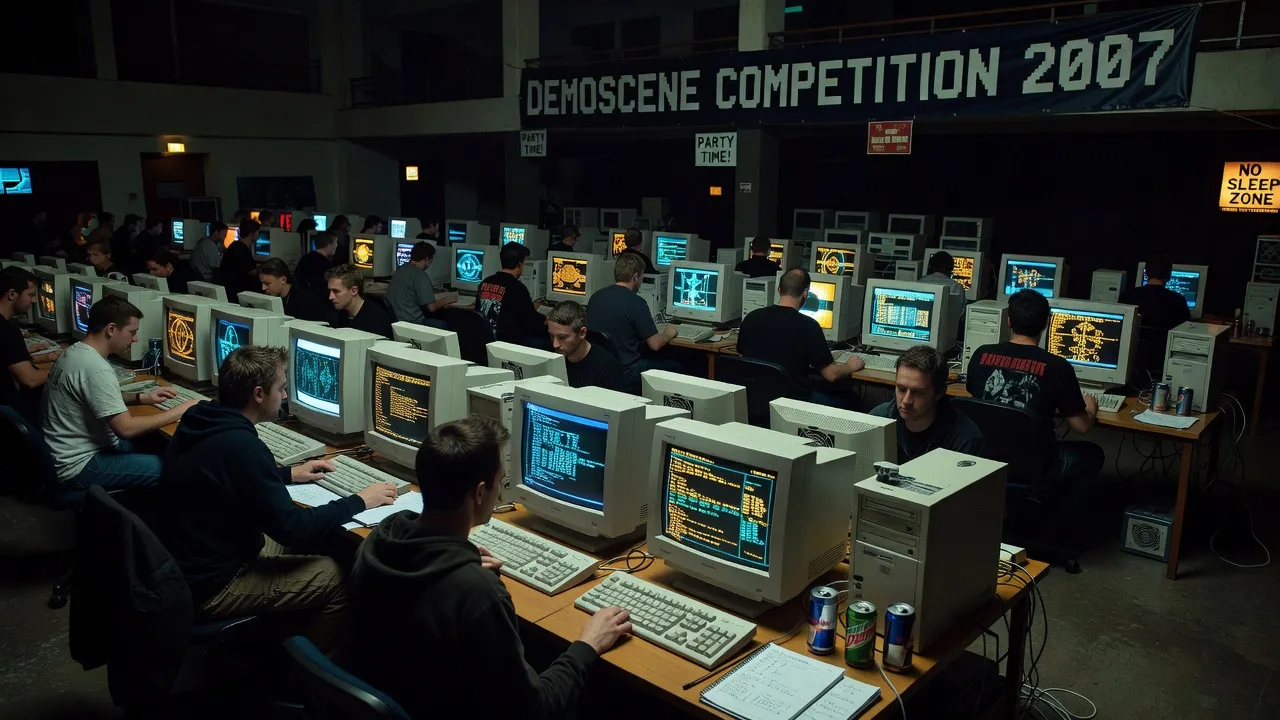
The atmosphere at Stream 2007 was a vibrant blend of focused concentration and relaxed social interaction. The party hall buzzed with the hum of computers, the clickety-clack of keyboards, and the murmur of conversations, occasionally punctuated by bursts of laughter or the sudden, awe-struck silence that follows the screening of a particularly impressive demo. Unlike the often overwhelming scale of mega-parties like Breakpoint, Stream maintained a more intimate, community-driven feel. This allowed for easier interaction between veterans and newcomers, fostering an environment where knowledge was freely exchanged, and collaborations often sparked spontaneously. The air was thick with the scent of soldering fumes, instant coffee, and the unique musk of a thousand computers running simultaneously, a sensory signature familiar to any demoscener. It was an atmosphere of shared passion, where the pursuit of digital artistry was paramount, but never at the expense of genuine human connection. The dedication of the Matt Current organizers ensured that the technical backbone of the party – from stable power to network connectivity and, crucially, a high-quality sound system – was impeccable, allowing creators to push boundaries without technical hindrances.
The Finnish Demoscene in 2007
In 2007, the Finnish demoscene stood as a formidable pillar within the global movement, boasting a rich history and a reputation for technical excellence and artistic innovation. Finland had long been a hotbed of demoscene activity, producing legendary groups whose influence resonated far beyond their borders. While the era of Future Crew’s groundbreaking Amiga demos like “Unreal” (1993) and “Second Reality” (1993) was a decade and a half in the past, their legacy of pushing hardware to its absolute limits and crafting breathtaking audiovisual experiences continued to inspire.
By 2007, the PC platform had firmly established itself as the dominant force, with groups like Fairlight, renowned for their intricate 64k intros and full demos, continuing to set high standards. Their 2006 demo “Starstruck,” for instance, was a masterclass in procedural generation and visual fidelity, showcasing the cutting edge of real-time 3D rendering achievable within tight size constraints. Another prominent Finnish group, ASD (Andromeda Software Development), was also making significant waves. Their 2007 demo “Evolution,” released at Breakpoint, was a landmark achievement, lauded for its stunning visuals, innovative design, and powerful soundtrack, demonstrating a sophisticated blend of art and code that was characteristic of the Finnish approach. CNCD, another highly respected Finnish outfit, consistently delivered high-quality productions, often characterized by their clean aesthetics and technical polish. Rebels, while perhaps not as prolific as some, contributed to the diverse tapestry with their distinct style.
Stream 2007 built on the foundation of the previous Stream party in 2005 — read the 2005 archive to understand the evolution.
The Finnish scene often distinguished itself with a particular emphasis on tracker music, a tradition deeply embedded in its roots. Many Finnish demosceners were not only skilled coders and artists but also accomplished musicians, often composing their own soundtracks using modules (MODs, S3Ms, ITs, XMs), which contributed significantly to the unique sonic identity of their productions. This strong musical foundation was a defining characteristic, often leading to demos where the audio experience was as meticulously crafted as the visual.
Globally, 2007 was a fascinating period for the demoscene. It was firmly entrenched in the post-dot-com bust era, having weathered the storm of the early 2000s and emerged leaner but more resilient. The smartphone revolution was still on the horizon, meaning the PC remained the undisputed king for high-end demo production. Graphics cards were becoming increasingly powerful, with programmable shaders opening up entirely new avenues for real-time visual effects, leading to an arms race of graphical innovation. The focus was heavily on pushing real-time 3D, procedural generation, and shader mastery to their absolute limits, particularly in the highly competitive 64k intro category, where entire worlds were conjured from just 65,536 bytes of code.
European demoparties, especially Breakpoint in Germany, served as vital annual pilgrimages, showcasing the year’s best productions and setting trends. Within this broader context, regional parties like Stream 2007 played a crucial role. They acted as local hubs, nurturing talent, providing platforms for smaller groups and individual creators, and fostering a sense of national identity within the global scene. Stream 2007, therefore, was not just an isolated event but an integral part of this dynamic ecosystem, reflecting the Finnish scene’s strengths and its ongoing contributions to the art of demomaking. It was a place where the next generation of Finnish demosceners could cut their teeth, learn from veterans, and showcase their burgeoning talents, ensuring the continued vitality of a scene celebrated for its innovation and artistic integrity.
Getting There: Practical Information for Visitors
For both local and international demosceners, navigating to Stream 2007 in Tampere required a bit of planning, though the organizers made every effort to streamline the process. Tampere, a significant urban center in Finland, was well-connected, making it accessible despite its location in the Nordic reaches.
For those arriving from within Finland or neighboring regions, public transport offered a convenient solution. From Tampere city center, attendees could easily reach the party venue using local bus services. Bus 13, heading towards Hermia, or Bus 22, bound for Annala, were the designated routes. A single fare typically cost around 2.50 EUR, a modest sum for reliable and efficient transport. The Finnish public transport system was, and remains, known for its punctuality and cleanliness, ensuring a smooth journey for partygoers eager to get to the action. These routes would have deposited attendees within a short walk of the venue, allowing for a hassle-free arrival.
International visitors, a demographic actively encouraged by the “FREE international” ticket policy, had several viable options. The most direct route was often flying into Tampere-Pirkkala Airport (TMP). In 2007, budget airlines like Ryanair were instrumental in connecting smaller European cities, and Ryanair specifically offered routes to Tampere, making it an affordable gateway for many. This direct access was a significant boon, reducing travel time and complexity for those journeying from further afield.
The full range of the competition categories contested at Stream 2007 is documented in our demoparty competition guide.
Alternatively, many international attendees opted to fly into Helsinki-Vantaa Airport (HEL), Finland’s primary international hub. From Helsinki, Tampere is easily reachable by train. Finnish trains are renowned for their comfort, efficiency, and scenic routes, offering a pleasant journey through the Finnish countryside. The train journey from Helsinki to Tampere typically takes around two hours, making it a viable and often preferred option for those who might have found better flight connections to the capital. This two-step journey, while requiring a transfer, was a common and well-trodden path for international visitors to Finnish demoparties.
The organizers understood that travel costs could be a barrier, especially for those coming from outside Finland. The decision to offer FREE international tickets was a powerful incentive, effectively offsetting a portion of the flight or train expenses. This policy underscored the demoscene’s global, inclusive spirit, actively welcoming a diverse array of talent and perspectives. It meant that a demoscener from, say, Germany or Poland, could spend their travel budget on the journey itself, knowing that their entry to a high-quality party was already secured.
While specific accommodation details weren’t explicitly provided by the organizers, attendees typically had a few choices. Many opted to sleep on-site, a common demoparty tradition, bringing sleeping bags and finding a corner in the party hall or a designated chill-out area. For those preferring more comfort, Tampere city center offered a range of hostels and hotels to suit various budgets, easily accessible via the aforementioned bus routes. The city itself, with its vibrant student population and industrial charm, offered plenty to explore for those who had spare time outside of the intense party schedule. The practicalities of getting to Stream 2007 were well-considered, reflecting the organizers’ commitment to making the event as accessible and enjoyable as possible for everyone.
Features and Facilities
The Stream parties were organized within the demoscene culture behind the Stream events that defined Finnish underground computing in the 2000s.
Stream 2007 wasn’t just about the competitions and the demos; it was also meticulously designed to foster an environment conducive to both intense creative output and relaxed social interaction. The facilities provided by Matt Current were thoughtfully curated, reflecting a deep understanding of demoscene culture and the needs of its participants.
One of the most appreciated amenities was the abundance of sofas. While seemingly a minor detail, comfortable seating is a luxury at many demoparties. These sofas provided crucial zones for relaxation, allowing demosceners to unwind after hours of coding or intense demo-watching. They became impromptu meeting points, ideal for late-night discussions about algorithms, graphic design, or music theory. Many a collaboration was likely sparked on these very sofas, as ideas flowed freely in the relaxed setting. They also served as temporary workstations for those who preferred a more laid-back coding posture, fostering a sense of home away from home within the party hall.
Perhaps the most distinctly Finnish feature, and certainly a highlight for many international visitors, was the inclusion of a sauna with a chill-out area on the 2nd floor. The sauna is a cornerstone of Finnish culture, a place for physical and mental cleansing, and its integration into a demoparty was a stroke of genius. It offered a unique opportunity for attendees to decompress, socialize in a completely different context, and experience an authentic slice of Finnish life. The contrast of the intense heat of the sauna followed by a cool-down in the chill-out area or even a quick dash outside (weather permitting) provided a refreshing break from the often-stuffy party hall. This space became a social hub in its own right, where conversations could drift from technical challenges to personal anecdotes, forging stronger bonds between participants. It underscored the party’s commitment to offering a holistic experience, blending the serious aspects of creation with the essential elements of well-being and cultural immersion.
Crucial for any demoparty, especially one with strong musical roots, was the quality sound system. Stream 2007 boasted an excellent sound setup, ensuring that every nuance of the tracker music, chiptunes, and live performances resonated clearly and powerfully throughout the venue. In the demoscene, music is not merely background noise; it’s an integral component of the audiovisual experience, often driving the emotional core of a demo. A high-fidelity sound system meant that the intricate compositions of the music competitors, whether gritty chiptunes or soaring orchestral pieces, could be appreciated in their full glory. This also extended to the screening of demos and intros, where synchronized audio and visuals are paramount. The commitment to superior audio quality elevated the entire party experience, making it a feast for the ears as well as the eyes.
Adding to the social and entertainment aspects, DJs were on hand to spin tracks, transforming the party hall into a vibrant club atmosphere during off-competition hours. This provided a much-needed outlet for attendees to let loose, dance, and simply enjoy the collective energy. The DJ sets typically featured a mix of demoscene-related music, electronic genres, and other tracks popular within the scene, contributing significantly to the overall festive and communal mood. It was a chance to step away from the screens and engage in a different kind of shared experience, fostering a sense of unity and celebration.
Beyond these standout features, Stream 2007, like most well-run demoparties, would have provided essential infrastructure: ample power outlets for thousands of computers, reliable internet connectivity (a luxury that was still somewhat nascent in 2007 compared to today), and designated areas for compos and screenings. Food and drink provisions, whether through on-site catering or nearby shops, would have kept the attendees fueled throughout the long, creative nights. Collectively, these facilities demonstrated Matt Current’s dedication to creating a comfortable, productive, and memorable environment, ensuring that Stream 2007 was not just an event, but a truly immersive demoscene experience.
Community and International Spirit
The Stream parties preserved a musical tradition — musiques-traditionnelles.com examines how music traditions persist in digital communities across different cultural contexts.
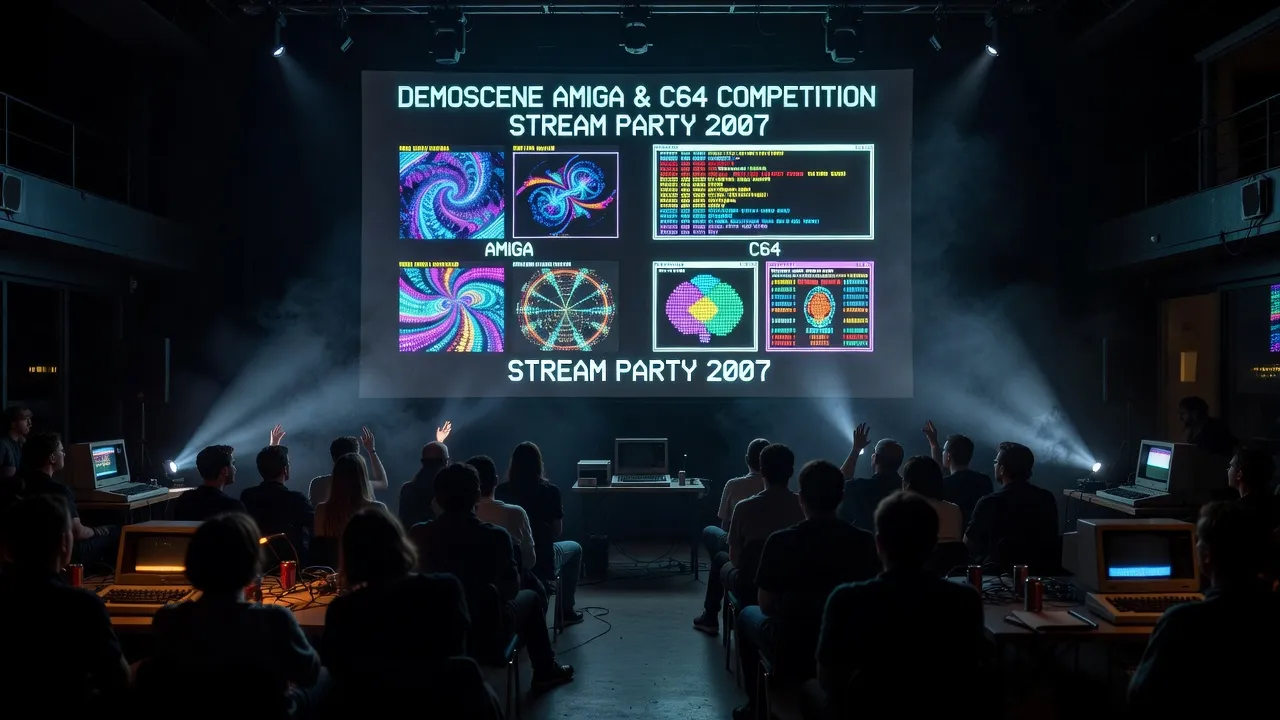
The demoscene has always been a global phenomenon, defying geographical boundaries through shared passion and digital connectivity. Stream 2007 powerfully exemplified this ethos, cultivating a strong sense of community and an undeniable international spirit that set it apart.
The “FREE international” ticket policy was the cornerstone of this inclusivity. It was a deliberate, visionary decision by Matt Current to lower barriers for global participation, recognizing that the strength of the demoscene lies in its diverse voices and talents. This policy actively encouraged demosceners from across Europe and beyond to make the pilgrimage to Tampere, transforming Stream 2007 into a truly multicultural gathering. Attendees from neighboring Nordic countries, the robust German scene, the burgeoning Eastern European communities, and even further afield converged, bringing with them a rich tapestry of coding styles, artistic approaches, and musical influences.
Communication channels prior to and during the event were vital. The contact email, info@streamparty.org, served as the formal gateway for inquiries and information. However, the true heartbeat of pre-party hype, coordination, and real-time interaction was IRC #streamparty on IRCnet. In 2007, Internet Relay Chat (IRC) was still the undisputed king of real-time text communication for the demoscene. It was where groups announced their attendance, discussed travel plans, shared snippets of their progress, and engaged in friendly banter. The #streamparty channel became a virtual common room, fostering connections even before attendees set foot in Tampere. During the party itself, IRC provided a reliable backchannel for organizers to communicate updates and for attendees to coordinate meetups or troubleshoot minor issues. It was a digital extension of the physical party, embodying the scene’s early adoption of internet-based community building.
The diverse mix of attendees created a vibrant melting pot of ideas and perspectives. Discussions weren’t just about the latest shader tricks or tracker module techniques; they spanned cultural differences, shared experiences, and the universal language of creative coding. Friendships were forged over late-night coding sessions, collaborations sparked during casual conversations, and mentorship naturally occurred as veterans shared their wisdom with eager newcomers. This organic exchange of knowledge and passion is a hallmark of the demoscene, and Stream 2007 provided an ideal crucible for it. The intimacy of the party, compared to larger events, facilitated deeper connections and more meaningful interactions.
This international spirit wasn’t just about presence; it was about active participation. Foreign groups and individuals contributed to the competitions, bringing fresh perspectives and pushing the creative boundaries. The “free international” policy wasn’t just about filling seats; it was about enriching the competitive landscape and ensuring that the productions showcased at Stream 2007 represented a broader cross-section of global demoscene talent.
Stream 2007 existed within the demoparty landscape Stream belonged to — a rich calendar of events across Europe.
The demoscene’s unique, non-commercial, open-source-like ethos thrives on this kind of community and sharing. There’s a strong emphasis on sharing techniques, tools, and even source code (especially for older productions), fostering an environment of collaborative learning rather than cutthroat competition. Stream 2007, with its welcoming atmosphere and international outreach, perfectly embodied these values, solidifying its reputation as a party where the global demoscene truly felt at home. It was a testament to how a well-organized regional party could play a significant role in strengthening the bonds of a worldwide creative movement.
The Stream Series Legacy
Stream 2007 occupies a significant position in the narrative of Finnish demoparties and, by extension, the broader European demoscene. While not the largest event, its meticulous organization, progressive policies, and vibrant atmosphere cemented its legacy as a pivotal gathering that year. It wasn’t merely a one-off; it was a testament to the enduring power of community-driven events that sustain and enrich the demoscene between the mega-parties.
Demo production in 2007 was shaped by the hardware of its era — i-Actu examines how the technology landscape of 2007 influenced demos and what it enabled.
The immediate impact of Stream 2007 was its contribution to the Finnish demoscene’s continued vitality. By providing a high-quality platform in Tampere, Matt Current ensured that local talent had a dedicated venue to showcase their work, receive feedback, and connect with peers. This was crucial for nurturing the next generation of Finnish demosceners, allowing them to gain experience and confidence before potentially venturing to larger international stages. The party’s focus on quality sound, comfortable facilities, and a strong sense of community helped reinforce the high standards for which the Finnish scene was known.
Beyond its national importance, Stream 2007’s most profound legacy might be its innovative approach to international inclusion. The “FREE international” ticket policy was a bold statement, demonstrating a deep understanding of the demoscene’s global nature. In an era where travel costs could be prohibitive, this policy directly contributed to a more diverse and internationally representative attendee base and competition roster. It set an example for other regional parties, highlighting how strategic gestures could significantly boost international participation and cross-cultural exchange. This wasn’t just about boosting numbers; it was about enriching the creative dialogue and fostering stronger ties across national borders, solidifying the European demoscene as a truly interconnected network.
Stream 2007 also continued the tradition of demoparties as vital hubs for innovation. The intense atmosphere, fueled by the presence of both seasoned veterans and enthusiastic newcomers, inevitably led to the sharing of techniques, the sparking of new ideas, and the setting of new benchmarks in creative coding, graphics, and music. The competitions, screened on a quality sound system, pushed participants to deliver their best, contributing to the overall evolution of demomaking techniques.
The lessons learned from Stream 2007, particularly regarding event management, community building, and international outreach, undoubtedly influenced subsequent demoscene gatherings. It demonstrated that a party didn’t need to be the biggest to be significant; it needed to be well-organized, welcoming, and deeply rooted in the demoscene’s core values. The emphasis on unique features like the sauna experience also showcased how integrating local culture could create a more memorable and distinctive event.
In the broader historical narrative of the demoscene, parties like Stream 2007 are the essential connective tissue. While events like Breakpoint captured headlines with their massive scale and groundbreaking releases, it was the consistent efforts of organizers like Matt Current at regional parties that kept the flame alive year-round. They provided consistent opportunities for creation, collaboration, and celebration, ensuring that the demoscene remained a vibrant, active, and welcoming subculture.
Looking back from today, Stream 2007 represents a golden age for many demosceners – a time of intense creativity, strong community bonds, and a tangible sense of pioneering spirit. Its legacy endures not just in the memories of those who attended, but in the continued ethos of openness, technical excellence, and artistic passion that defines the demoscene to this day. It stands as a powerful reminder that even smaller, regionally focused events can leave an indelible mark on a global creative movement, proving that the spirit of demo-making thrives wherever dedicated individuals gather to push the boundaries of digital art.