
About Sarah Chen
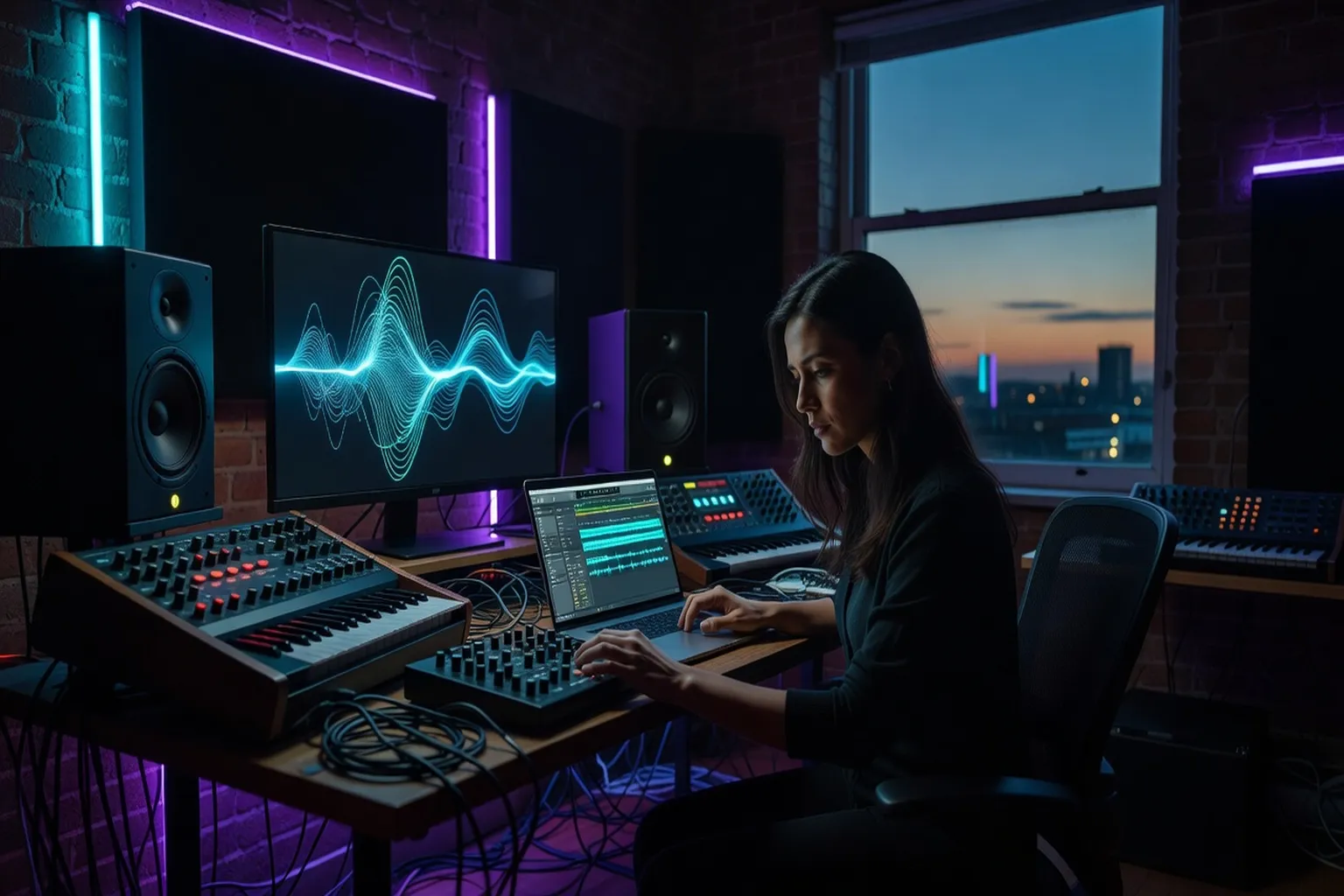
Sarah Chen is a leading figure in the emergent field of AI-driven music composition. With a background in music technology from the esteemed Goldsmiths University of London, Sarah’s journey into AI began in earnest following a transformative residency at DeepMind London in 2018. It was during this time that her fascination with the intersection of artificial intelligence and music took root, setting her on a path that would reshape her career. She has since established Luminal Audio, her own AI music studio located in the creative heart of Shoreditch, where she crafts innovative compositions that place AI as a collaborative partner rather than simply a tool.
The platforms Sarah discusses are directly compared in our Claude, GPT-4, and Gemini music comparison, which benchmarks outputs across multiple creative scenarios.
Sarah approach to creative prompting draws on principles explored in our guide to prompt engineering for AI music, where we break down the most effective techniques.
Her most recent project, “Latent Spaces,” exemplifies this ethos, showcasing an album made through AI-human collaboration that stretches the boundaries of traditional music-making processes. Beyond her studio endeavors, Sarah shares her insights and techniques with a wider audience through her regular column in MattCurrent, where she delves into AI composition techniques, offering a glimpse into her unique creative processes.
[Expert card placeholder — portrait image will be inserted here] Sarah Chen | AI Music Researcher & Composer | London, UK | 8 years experience in AI music
“The Machine Is My Collaborator, Not My Ghost-Writer”: A Conversation with Sarah Chen
It’s a late afternoon at Luminal Audio, Sarah Chen’s studio nestled in the vibrant district of Shoreditch. The space is a buzz of creative energy, with synthesizers humming softly in the background and laptop screens flickering with data and possibilities. Sarah, unfazed by the technological symphony around her, settles in to discuss her pioneering work in AI music.
The ethical dimensions Sarah raises around transparency and attribution are explored at greater length in our feature on AI music ethics and competitions.
Readers wanting a broader overview of the tools Sarah mentions should start with our roundup of the best AI tools for music production.
Q: Sarah, you’ve been working at the intersection of AI and music for eight years. How has the quality of AI music tools evolved in that time?
A: The evolution of AI music tools over the past eight years has been nothing short of remarkable. When I first started in 2018, we were working with fairly rudimentary recurrent neural networks (RNNs)—think of Google’s Magenta. The results, while intriguing, often felt like crude approximations of what we were aiming for musically. However, they served as an important proof-of-concept that machines could “understand” and generate music in a meaningful way. Fast forward a few years, Suno and Udio came into play and were game-changers. They raised the bar for what we could expect from AI by introducing higher fidelity audio generation and more contextually aware outputs. Around 2024, large language models (LLMs) such as OpenAI’s GPT-3 started to find their way into music composition, which was a pivot point. These models brought a nuanced depth to AI’s problem-solving capabilities, especially in conceptualizing and structuring complex compositions. With each iteration, the interfaces improved, the outputs became richer, and the potential for genuine collaboration unfolded. Each development brought us closer to genuine AI-human collaboration, allowing us to creatively explore in ways that I could hardly have imagined back when I started. It’s less about the raw capability now and more about how creatively we can use these tools.
Q: You use Claude, GPT-4o, and Gemini in your workflow—can you explain what each one does best for music composition?
A: Certainly. Claude, in particular, excels in creating deep and thoughtful conceptual briefs. It’s quite adept at processing complex themes and emotions, which makes it invaluable for generating nuanced lyricism and thematic direction in my work. For example, I’ll prompt Claude with a theme like “solitude within connection,” and its conceptual depth will guide the lyrical narrative with unexpected layers, suggesting metaphors and imagery that might not have immediately come to mind.
On the other hand, GPT-4o shines in the iterative aspects of composition. It handles harmony and chord progressions like a seasoned composer, suggesting variations that align wonderfully with established structures. I often input an initial chord progression and let GPT-4o explore the harmonic possibilities, which aids me in building more intricate arrangements. It’s almost like it has a vast library of musical theory built into it, offering insights that are both traditional and avant-garde depending on the direction I push.
Meanwhile, Gemini is an absolute ace when I need cross-modal thinking, particularly for projects that combine visual and audio elements. It’s uniquely qualified to bridge the gap between visual cues—a color palette or an architectural design, for instance—and melodic motifs or rhythmical structures. For instance, when working on a piece inspired by a Rothko painting, Gemini helped “translate” the painting’s emotional resonance into musical textures and palettes, capturing the subtle transitions of shade and hue into sound, which added a dimension that mere notes could never achieve on their own.
Q: Walk us through how you actually compose a track using AI tools from start to finish.
A: The process typically begins with formulating a mood brief in Claude. I find that setting an emotional or thematic anchor early in the process helps guide everything that follows. For instance, if the theme is “nostalgic futurism,” Claude helps flesh out this abstract concept into more tangible elements I could work with, like sound textures reminiscent of old vinyl layered with futuristic synths.
Once the mood is articulated, I switch gears and pull up GPT-4o for structural input. It helps suggest chord progressions that might capture the intended emotionality. I might start with a 4-chord progression, and GPT-4o will provide alternative voicings or suggest modulation paths that open new avenues in the composition. Its suggestions often prompt me to rethink standard progressions and lean into more experimental harmonic structures.
With the chord structure in place, I jump into Udio to generate the initial audio stems. This involves feeding Udio with the conceptual map and chord progressions to produce diverse musical segments that form the backbone of the track. Udio’s real power shines through in its ability to craft textures and timbres that blend seamlessly with the established mood, producing layers that range from ambient pads to dynamic percussive elements.
From here, everything gets ported into Ableton Live, where refinement is key. The AI outputs are indeed drafts; my role is to massage them into something cohesive. AI is significantly beneficial during the mastering stage too; I rely on it for objective feedback on dynamics, frequency balance, and loudness matching across different listening environments, often through AI-powered mastering plugins designed for real-time analysis and suggestion. The end result is not just the sum of its parts but a chemistry of human intuition and AI precision.
Q: There’s a criticism that AI music tools produce generic output. How do you get original results?
A: This is a valid concern but one that can be effectively mitigated through creative prompt engineering. I see the specificity of prompts as the secret sauce to avoiding generic AI output. By introducing constraints intentionally—such as requesting a composition based on a non-linear time signature or layering unconventional instruments—I can push the AI into less traversed territories. One technique I frequently employ is the “tension-and-release brief,” where I instruct the AI to compose sequences with intentional discord that resolve unexpectedly. This generates a dynamic narrative through sound and keeps the listener engaged.
Moreover, originality often emerges from the juxtaposition of AI-generated sounds with organic layers. I always integrate acoustic recordings—vocals, live instrumentation—that add warmth and human imperfection to the track, preserving an organic quality that AI sometimes lacks. These elements serve to anchor the technological inputs in something that breathes and feels alive. AI outputs may provide the skeleton, but it’s the human touch that gives it skin, heart, and soul.
Q: You’ve been outspoken about AI music ethics. Where do you stand on AI-generated tracks in commercial releases?
A: My stance is that transparency is paramount. When an AI has been involved in creating a piece of music, it’s crucial to label releases accordingly. This not only respects the creative process but also aids in establishing the track’s legitimacy in the eyes of listeners and peers. I distinguish between AI-assisted—which involves human oversight and input—and AI-generated tracks, which may sometimes lack direct human input but benefit from machine learning technologies.
This approach connects directly to what we explore in our guide on AI music generation, where the same principle of creative constraint produces more interesting outputs.
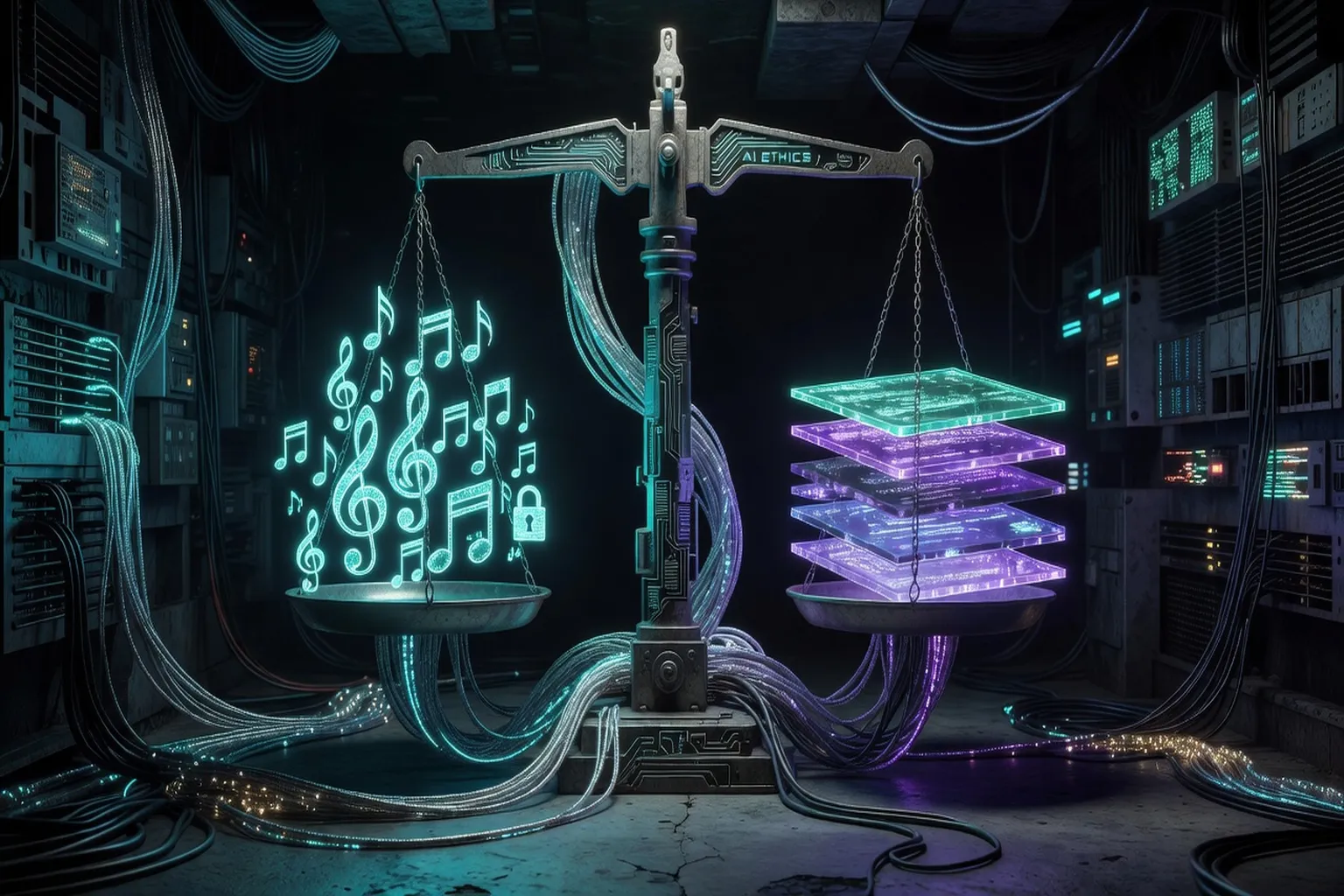
Regarding royalties, it’s essential to recognize the value of the data AI models are trained on. I advocate for equitable and transparent compensation mechanisms for any datasets that significantly contribute to the resulting music. Everyone involved in the creative or training phase deserves recognition and fair compensation. In my releases, I aim to be as clear as possible about what is AI-influenced versus crafted by human hands, which I believe is both ethical and ultimately builds trust with my audience. Transparency clarifies roles, builds respect, and marks a path forward for creatives and technologists alike.
Q: Demoscene musicians are increasingly using AI tools. Have you engaged with that community?
A: Absolutely, the demoscene aligns beautifully with the AI ethos of creative constraints driving innovation. I attended the Assembly gathering in Helsinki, where I had the fantastic opportunity to meet with tracker musicians and exchange ideas. What excites me about demoscene artists is their intrinsic understanding of working within constraints to push creative boundaries—these are the people who push machines beyond their intended capabilities.
I’ve seen how their constraint-based philosophy makes it an ideal breeding ground for testing AI tools. A few months ago, I recommended tools like ORCA, which allows algorithmic composition to flourish in unexpected ways, to demoscene musicians. The reception was overwhelmingly positive. Seeing them embrace AI to enhance their already boundary-pushing work was inspiring. It was as though they had uncovered a new palette of colors with which to paint, making their creations even more immersive and boundary-defining.
Q: What mistakes do beginners make when they first start using AI music tools?
A: Enthusiastic beginners sometimes make the mistake of viewing AI as a one-shot solution. They feed in a prompt, receive an output, and use it as-is, without appreciating the iterative benefits of refining and iterating. Another common oversight is providing insufficient or overly generic prompts, which leads AI to generate formulaic content lacking in originality or emotional depth.
Moreover, there’s often an over-reliance on the generated audio, with minimal post-processing. It’s crucial to remember that AI outputs are a starting point rather than a finished product. Every piece needs the polish and emotional insight that only human intuition can provide. Lastly, newcomers tend to forget to incorporate hardware instruments into their AI-driven workflows. Combining the tactile experience of live instruments with AI-generated material can enrich the sound and provide a more robust musical experience. A blend of tactile and digital inputs often results in a richer, more emotionally resonant piece of work.
Q: What’s your vision for AI music in 2027 and beyond?
A: By 2027, I envision AI as a real-time collaborator in live performances, acting almost as an improvisational partner. We’ll likely see AI systems that can learn and evolve with a given artist’s personal style, crafting music that aligns more closely with individual preferences over time. This will democratize music creation, allowing people with minimal formal knowledge to create complex pieces they would never have attempted otherwise, potentially ushering in a new renaissance of musical diversity and creativity.
However, there’s an associated risk: the potential for these tools to homogenize creativity if used uncritically. Thus, promoting awareness of using AI as a creative partnership, rather than as the sole driver of creation, will be crucial. Striking the balance between technology and creativity will be an ongoing conversation, essential for nurturing individual voices amidst a sea of algorithmic possibilities.
Q: Final question: what would you say to a young musician who’s afraid AI will replace them?
A: To that young musician, I’d say that AI tools exist to amplify your creativity, not replace it. While the role of musicians may be shifting, the core essence of musical expression and emotion remains irreplaceably human. Machines can handle repetitive tasks and suggest creative directions, but the soul of music—the narrative and emotional depth—is a fundamentally human endeavour. Embrace AI as you would any new instrument; see it as a collaborator that elevates your voice, rather than one that replaces it. Fear not the future, but harness it to propel your distinctive voice and vision into new artistic realms.
Q: If you could only recommend three AI music tools to a complete beginner, what would they be and why?
A: For a complete beginner, I’d suggest starting with tools that offer tangible, straightforward ways to explore AI-driven music. First, I’d recommend Amper Music. It’s incredibly user-friendly and serves as an excellent introduction to AI composition. It allows users to create music by choosing various parameters like tempo, mood, and style, making it an intuitive tool for experimentation and exploring different musical paths.
Second on my list would be AIVA (Artificial Intelligence Virtual Artist), which offers a more structured approach to composition. AIVA provides a suite of tools that guide users through the process of generating original music, ranging from classical symphonies to modern jazz. It’s beneficial for those who wish to understand the complexities of music theory while experimenting with AI’s creative potential.
Finally, Magenta by Google is a fantastic tool for those interested in the intersection of AI and music technology. Although it may require a bit more technical knowledge to fully leverage its capabilities, it’s an open-source platform that provides endless possibilities for creative exploration, from melody generators to complex machine learning models. Using these tools, beginners can not only dip their toes into AI music composition but also gain valuable insights into the evolving landscape of music technology.
Readers who want to explore the tracker side of this ecosystem will find Sarah’s recommended tools covered in depth in our tracker music revival guide.
Rapid Fire with Sarah Chen
Five quick questions to close the session:
Sarah observations about mental state and musical output echo research into science-backed approaches to creative performance, examining how cognitive load affects creative work.
-
Favorite AI music tool right now?
GPT-4o, for its versatility in composition. -
Most overrated AI music feature?
AI-driven vocals—still a ways to go for authentic expression. -
Best prompt you’ve ever written for music?
“Create a symphony for a city asleep, punctuated by whispers of forgotten dreams.” The result was a hauntingly melodic interpretation with subdued tones and layers reflecting a world between consciousness and subconsciousness. -
Album that couldn’t have existed without AI?
“Latent Spaces”—my entire conceptual process was rooted in AI collaboration. -
One thing AI will never replace in music?
The spontaneous emotions of a live performance.
Three Takeaways from Sarah Chen
- Prompting is the new instrument.
In Sarah’s world, crafting sophisticated prompts for AI becomes akin to mastering a new musical instrument. Just as a virtuoso can draw powerful emotions through nuanced performance, a skilled prompter can evoke profound creative possibilities from AI, turning mundane ideas into extraordinary compositions. Mastering the art of prompting involves understanding the nuances of language and communication, which can significantly enhance the creativity of the AI-assisted outputs.
For the technically inclined, this guide to essential BSD tools used by demosceners includes packages relevant to the open-source AI music pipeline Sarah describes.
-
Constraints breed creativity.
Providing AI with unusual constraints—like asymmetrical time signatures or cross-genre provocations—does more than guide the composition, it explodes the creative potential. Such targeted limits are not restrictive; they ignite innovative leaps that set productions apart. Working within clear boundaries often pushes musicians and AI alike to dig deeper, discovering novel approaches and solutions that expand the horizons of what music can achieve. -
Transparency builds trust.
Transparency about AI involvement in music releases isn’t just ethical; it actively fosters trust and respect among audiences and peers. Labeling and acknowledging AI contributions helps demystify the technology, paving the way for a wider understanding and appreciation of this new age of composition. Audiences who are informed of AI’s role in the creative process often show greater engagement, respect, and curiosity, which bridge the gap between traditional music-making and technological innovation.
Editor’s Note
Sarah Chen’s insights into the evolving landscape of AI in music composition offer valuable perspectives for our diverse community of demosceners, tracker musicians, and AI music enthusiasts. Her innovative approach bridges the gap between traditional music-making and technological advancement, which is pivotal for readers committed to pushing creative boundaries. This interview not only sheds light on Sarah’s pioneering work but also sets the stage for her upcoming workshop at the 2026 Revision demoparty. There, she’ll delve even deeper into AI-assisted composition, offering a hands-on experience for those eager to explore new dimensions in music creation. We are excited to continue this conversation and encourage you to become part of it. Have questions for Sarah? Want to know more about her workshop or AI in music? Send us your queries, and we’ll include them in our follow-up feature. Let’s keep pushing the envelope and inspiring innovation together.