
The demoscene, a vibrant subculture dedicated to crafting real-time audio-visual presentations, thrives on innovation, technical prowess, and a profound sense of community. At its heart lie demoparties – gatherings where creators converge to showcase their latest works, share knowledge, and forge lasting connections. Among Finland’s rich demoscene history, the Stream party series carved out a unique and enduring niche. For eight consecutive years, from 2003 to 2011, Stream served as a vital hub, fostering creativity and pushing the boundaries of digital art. This retrospective for MattCurrent.org delves into Stream 8, the culminating event of this remarkable run, held in May 2011 in Tampere. More than just a competition, Stream 8 represented a confluence of tradition and emerging trends, a testament to the demoscene’s adaptability and its unwavering spirit of collaboration. Join us as we uncover the historical record, technical intricacies, and lasting legacy of a party that, even over a decade later in 2026, continues to resonate within the digital arts landscape.
The Tampere Anomaly: Stream’s Enduring Legacy
The Finnish demoscene boasts a storied history, often dominated by large-scale events like Assembly and The Party. Yet, it was in Tampere, Finland’s third-largest city, that the Stream demoparty series quietly built its own formidable legacy. From its inception in 2003, Stream established itself as a consistent, community-focused gathering, a vital counterpoint to the larger, more commercialized events. Stream 8, held in May 2011, marked the eighth consecutive year of this independent party, a remarkable feat of sustained effort and dedication from its organizers. This continuity provided a stable platform for Finnish and international sceners alike, fostering a strong sense of local identity within the broader global demoscene.
Stream’s enduring appeal lay in its ability to maintain a grassroots feel while still embracing innovation. While Stream 7 in 2010 drew around 200 visitors, Stream 8 continued this tradition of a comfortably sized, intimate gathering where direct interaction and shared passion took precedence. The party became known for its welcoming atmosphere, a place where veterans could mentor newcomers and experimental ideas could flourish without the immense pressure of a massive stage. This consistent presence helped to cultivate a new generation of demosceners and creative coders in Finland, ensuring that the unique blend of art, technology, and community continued to thrive. The eight-year run underscored a commitment often unseen in the ephemeral world of independent events, solidifying Stream’s place as a cornerstone of demoscene history.
K-yttöauto Green: A Venue Transformed
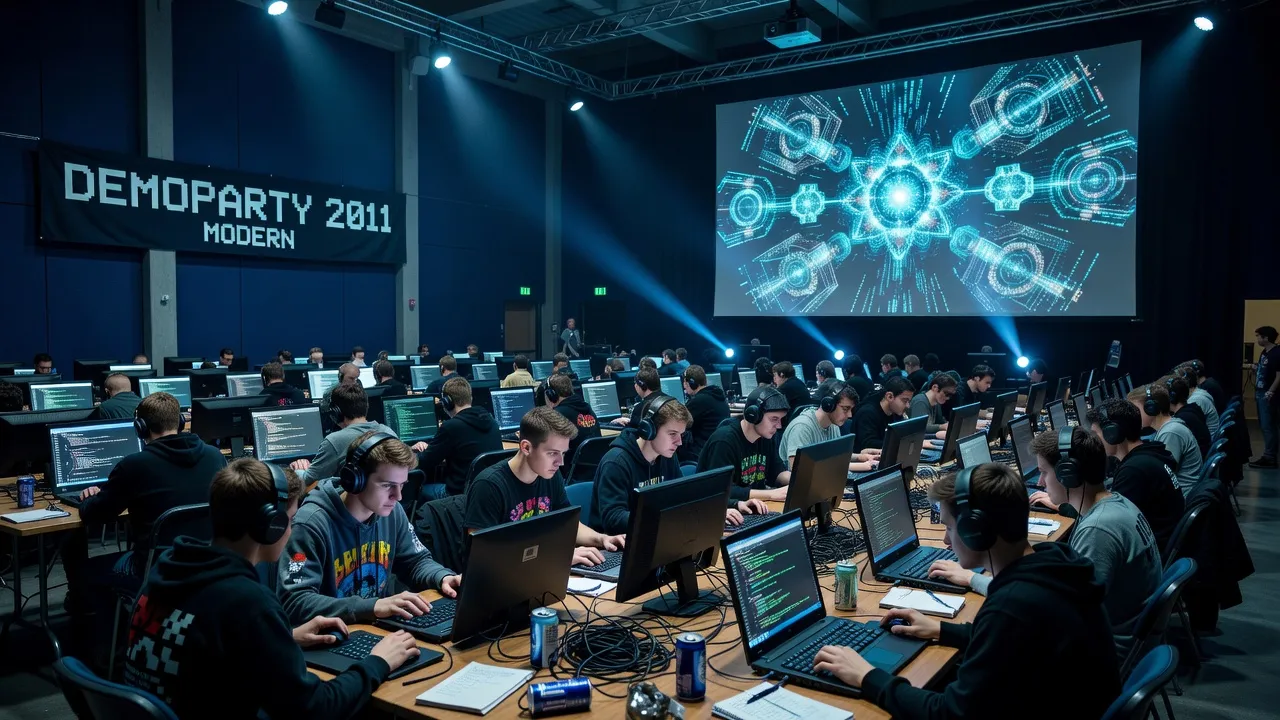
The choice of venue for a demoparty is often as critical as its programming, shaping the entire atmosphere and experience. Stream 8 found its home in the intriguing K-yttöauto Green, located at Kirkonmäenkatu 15 in Tampere. The name, suggestive of a former car dealership or repair shop (“K-yttöauto” roughly translates to “used car”), hints at a space that was far from a conventional event hall. Yet, in true demoscene spirit, this industrial canvas was transformed into a vibrant hub of creativity and camaraderie. The Stream crew expertly repurposed the space, demonstrating the scene’s knack for turning unconventional locations into temporary havens.
Stream 2011 was the culmination of a series — revisit the Stream 2007 event that preceded this one for context.
What truly set K-yttöauto Green apart were its distinctive features, tailored to the unique needs and desires of the demoscene community. Foremost among these were the “sofas everywhere,” providing essential comfort for marathon coding sessions, late-night discussions, and much-needed rest. This simple amenity underscored the party’s commitment to visitor well-being and a relaxed, homelike atmosphere. Quintessentially Finnish, the inclusion of “2 saunas” offered a unique cultural immersion and a perfect way for attendees to unwind and socialize. Beyond comfort, Stream 8 embraced technological innovation with an RFID cashless system, streamlining transactions and enhancing convenience – a forward-thinking approach for 2011. The stage lighting, powered by OSC/UDP and developed by sponsor Wavesum, showcased a commitment to modern control systems, allowing for dynamic and interactive visual presentations. Imagine a simple OSC message like /stage/color 1.0 0.5 0.0 dynamically changing the stage’s hue based on a demo’s output – a testament to the integrated, technical artistry. To further facilitate attendance, especially for those from the capital region, a “Streambus” shuttle service ran from Helsinki, reinforcing the community aspect and ease of access.
The Pulse of Creation: Schedule and Competitions
The heart of any demoparty beats to the rhythm of its schedule and the excitement of its competitions. Stream 8 meticulously crafted a program that balanced social interaction with intense creative deadlines, culminating in a weekend packed with diverse showcases. The party officially kicked off on Friday, with doors opening at 16:00, allowing attendees ample time to set up their workstations, reconnect with friends, and soak in the burgeoning atmosphere. The official opening ceremony at 21:00 set the stage, followed by a live performance from Little Bitchard at 23:00, injecting an immediate dose of energy and artistic flair into the evening.
Saturday was the crucible of creation, marked by strict deadlines and the highly anticipated competition screenings. The day was a testament to the demoscene’s multi-faceted nature, with categories designed to celebrate a wide spectrum of digital art forms. Competitions were ordered strategically, building anticipation towards the main events. It began with the Listening Music competition, where module and modern digital tracks were judged for their compositional merit. This was followed by Graphics, encompassing everything from intricate pixel art to stunning 3D renders. The Video/Animation compo showcased short films and motion graphics, pushing narrative and visual storytelling. Oldschool Demo brought a nostalgic yet technically challenging element, celebrating productions on classic hardware. The Intro competitions, including 64k, 4k, and 1k categories, tested extreme optimization and ingenious coding tricks, forcing creators to achieve maximum impact within minimal file sizes. Dance Music injected a more energetic, club-oriented vibe, leading finally to the flagship Demo Compos, where high-end PC productions pushed contemporary hardware to its limits. The intensity of the deadlines, the collective anticipation as each entry was screened, and the roar of the crowd for particularly impressive productions were the defining moments of Stream 8.
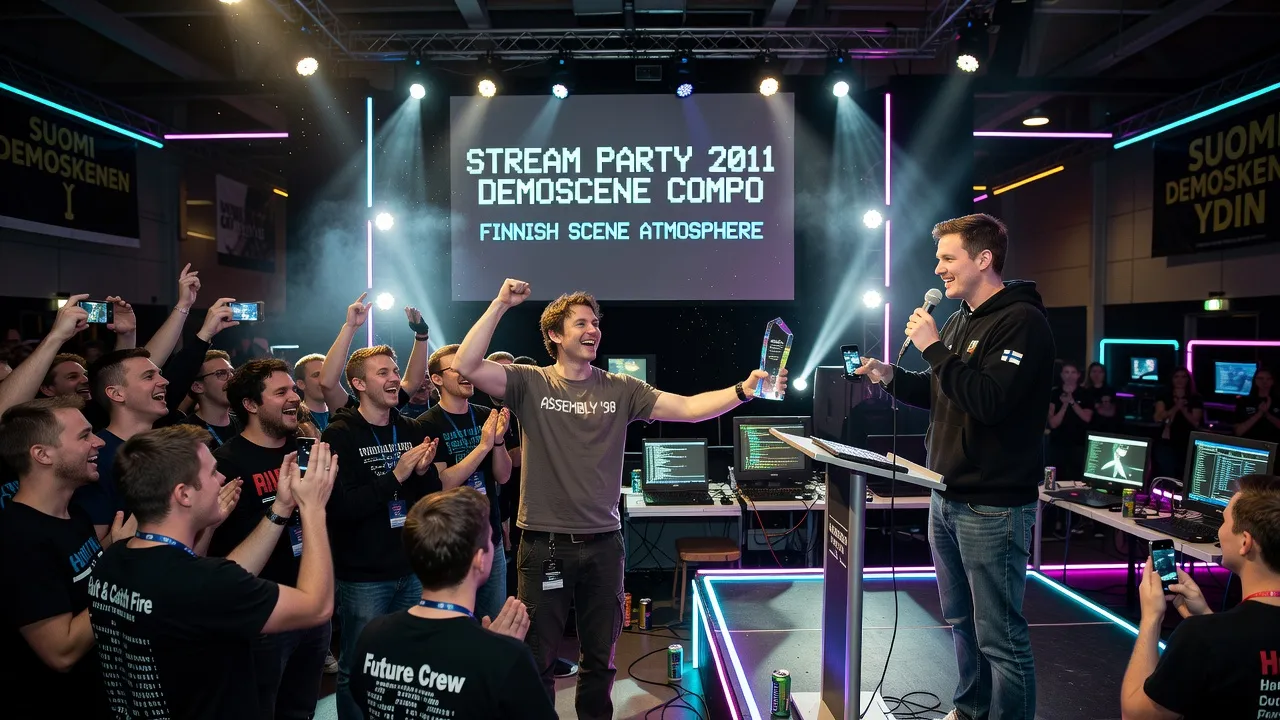
Sunday offered a more relaxed, celebratory close. The early hours of 02:00 saw the traditional demoparty karaoke session, a lighthearted Finnish tradition that allowed attendees to let loose and showcase their vocal talents – or lack thereof. The prize ceremony at 12:00 was the moment of truth, recognizing the exceptional talent and hard work displayed throughout the weekend. Finally, the party officially closed at 14:00, leaving behind a trail of new friendships, fresh inspirations, and a rich archive of digital artistry.
Bridging Generations: Platforms and Technological Scope
Stream 2011 hosted the full range of the competition categories typical of a Finnish demoparty — 64K, demo, music, graphics, and wild.
Stream 8 stood as a testament to the demoscene’s unique ability to bridge technological generations, embracing both the bleeding edge and the nostalgic past within a single event. This diverse platform support was a defining characteristic, reflecting the community’s broad interests and technical curiosity. At the forefront of modern capabilities was the “high-end PC” specification for demo compos, typically featuring an Intel Core i7 processor, an NVIDIA GeForce GTX 285 graphics card, and running Windows 7. This hardware, state-of-the-art for 2011, allowed demomakers to leverage advanced shader techniques, complex physics simulations, and high-fidelity real-time rendering, pushing the visual and auditory envelope.
However, Stream 8 was far from exclusive to the latest hardware. The presence of MacBook Pro machines indicated the growing adoption of Apple’s platform within the creative community, offering a different development ecosystem and aesthetic. On the other end of the modern spectrum was the “low-end HP Mini 2140,” a netbook that challenged demomakers to optimize their productions for minimal resources, embodying the “demaking” spirit of extracting maximum performance from limited hardware.
The party also paid homage to its roots through robust “oldschool” platform support. The Amiga 1200, a classic from the 1990s with its AGA chipset, continued to inspire new productions, demonstrating the enduring appeal of its custom hardware and unique sound capabilities. Even older platforms like the Commodore 64 and Game Boy Color were represented, reminding attendees of the scene’s origins and the incredible ingenuity required to create compelling demos with just a few kilobytes of memory and primitive processors.
Stream 2011 closed a chapter for the demoscene world that hosted the Stream parties in Finland.
Perhaps most forward-looking for 2011 was the emphasis on “handhelds.” The inclusion of platforms like the Nintendo Game Boy Advance (GBA), the Samsung Galaxy S (an early Android flagship), and Nokia’s N900/N8 (running MeeGo and Symbian, respectively) highlighted a burgeoning interest in mobile demomaking. This foresight recognized the increasing ubiquity of portable devices and challenged sceners to adapt their skills to touch interfaces, smaller screens, and power-constrained environments. Stream 8 thus served as a microcosm of the demoscene itself: a vibrant ecosystem where the nostalgic pursuit of retro perfection coexisted with the relentless exploration of new technologies and emerging platforms.
The Economic Engine: Sponsors, Support, and Sustenance
Organizing a demoparty, regardless of its size, is a significant undertaking requiring considerable resources, both human and financial. Stream 8’s success over eight consecutive years was a testament to meticulous planning, dedicated volunteer efforts, and a pragmatic approach to funding. The event operated on a tiered entry fee system: 25 EUR at the door, 20 EUR for advance tickets. This reasonable pricing made the party accessible, ensuring a broad attendance. Crucially, Stream 8 implemented a highly progressive policy: “FREE for international visitors.” This bold move was not just a gesture of goodwill; it was a strategic decision to foster diversity, encourage cross-cultural exchange, and elevate the party’s profile on the global demoscene map. By removing a financial barrier, Stream 8 actively invited talent and perspectives from beyond Finland’s borders, enriching the overall experience for everyone.
Sponsorship played a vital role in augmenting these entry fees, allowing the organizers to provide enhanced facilities and prizes. Applifier, a mobile ad network, was a key sponsor. Their involvement was particularly relevant given Stream 8’s forward-thinking embrace of handheld platforms like the Samsung Galaxy S and Nokia N900/N8. This partnership not only provided financial backing but also signaled an industry recognition of the demoscene’s pioneering work in real-time graphics and optimization, especially on emerging mobile hardware. Wavesum, another sponsor, contributed significantly through their expertise in stage lighting, implementing the innovative OSC/UDP control system that added a dynamic, professional touch to the competition screenings and live performances.
The Stream crew’s commitment to transparency and community engagement extended to their communication channels. Attendees and interested parties could reach out via info@streamparty.org for general inquiries, while the classic demoscene communication platform, IRCnet, hosted the active channel #streamparty. This combination of traditional and modern communication methods ensured that the party remained connected to its community, fostering a sense of belonging and open dialogue. The economic model of Stream 8, blending accessible fees, strategic sponsorships, and a generous international visitor policy, underpinned its longevity and reinforced its status as a truly community-driven event.
Events like Stream preserved unique community bonds — musiques-traditionnelles.com explores how digital music events preserve community traditions.
Stream’s Ripples: The Enduring Legacy
The conclusion of Stream 8 in 2011 marked the end of an impressive eight-year run, but its impact rippled far beyond that final prize ceremony. The Stream series, and Stream 8 in particular, left an indelible mark on the Finnish and international demoscene, contributing significantly to its evolution and enduring spirit. Its consistent presence provided a stable, nurturing environment for emerging talent, allowing new demogroups and individual artists to hone their skills and gain recognition. Many sceners who cut their teeth at Stream parties went on to achieve prominence in the broader demoscene and in related industries like game development, creative technology, and digital media.
Stream 8’s technological foresight, particularly its emphasis on diverse platforms, proved prescient. The early embrace of mobile demomaking, showcasing productions on devices like the Samsung Galaxy S and Nokia N900, anticipated the widespread adoption of smartphones as powerful computing platforms. Today, in 2026, mobile devices are ubiquitous, and the challenges of optimization and innovative interaction explored at Stream 8 remain highly relevant to creative coders and digital artists. The party’s innovative use of an RFID cashless system and OSC/UDP controlled stage lighting also showcased a willingness to integrate practical, modern technologies into the demoparty experience, setting a benchmark for other events.
Beyond the technical innovations, Stream’s greatest legacy lies in its cultivation of community. The “free for international visitors” policy fostered a vibrant exchange of ideas and friendships across borders, strengthening the global demoscene network. The intimate atmosphere, with its “sofas everywhere” and Finnish saunas, created a unique social fabric where collaboration and camaraderie flourished. Stream 8 demonstrated that even smaller, independent parties could have a profound and lasting impact by prioritizing community, technical exploration, and artistic freedom. It stands as a powerful reminder that the demoscene’s true strength lies not just in its dazzling productions, but in the passionate, interconnected individuals who bring them to life, a spirit that continues to inspire MattCurrent.org and the broader creative coding landscape.
Practical Tips / Getting Started
To place Stream 2011 in the wider context, our guide to the history of events like Stream covers the European demoparty calendar.
For those intrigued by the legacy of Stream 8 and eager to explore the demoscene, a wealth of resources awaits. The first step to experiencing Stream 8’s productions is to visit Pouet.net, the definitive demoscene production database. A quick search for “Stream 8” will yield lists of all entries across various competition categories, often with links to executable files, YouTube videos, and detailed information. Many older productions, especially those for classic platforms, require emulators to run. For Amiga demos, WinUAE is the gold standard for Windows users, while FS-UAE offers cross-platform compatibility. Commodore 64 productions can be enjoyed with VICE, and Game Boy Color entries with emulators like SameBoy or BGB. Mobile demos from 2011 might be harder to run directly on modern devices, but many have been recorded and are available on YouTube or demoscene archives.
To engage with the contemporary demoscene, start by exploring online communities such as the official Demoscene Discord server or various demoscene forums. Tools like ShaderToy provide a browser-based environment for experimenting with real-time graphics, while frameworks like Demoscene.js or libraries like Three.js and WebGL enable web-based demo creation. Many demogroups are open to new members, offering a collaborative entry point into the scene. Attending modern demoparties, both online and physical, is the best way to immerse yourself. Events like Revision (Germany), Buenzli (Switzerland), and of course, the enduring Assembly (Finland), continue the tradition exemplified by Stream 8, providing platforms for innovation, competition, and community building in 2026.
FAQ
Q1: Why was Stream 8 significant for the Finnish demoscene? A1: Stream 8 held particular significance as the eighth consecutive iteration of the Stream demoparty series, which ran from 2003 to 2011. This remarkable continuity provided a stable and beloved platform for Finnish and international demosceners, fostering a strong sense of community and nurturing new talent outside of the larger, more commercialized events like Assembly. It showcased a sustained, grassroots effort that deeply enriched the local demoscene landscape in Tampere and beyond.
Q2: What made Stream 8’s venue, K-yttöauto Green, unique? A2: K-yttöauto Green, likely a former car dealership or industrial space, was uniquely transformed for Stream 8. Its standout features included “sofas everywhere” for comfort, “2 saunas” offering a quintessential Finnish cultural experience, and an innovative RFID cashless system for convenience. The stage lighting, controlled via OSC/UDP by sponsor Wavesum, also provided a dynamic and technically advanced presentation environment,